

Vitamin B12 is the nutrient vegans should take seriously.
Not defensively. Not fearfully. Just seriously.
A well-planned vegan diet can provide protein, iron, calcium, fibre and an extraordinary range of useful nutrients. Vitamin B12 is different because ordinary unfortified plant foods are not considered reliable sources.
That is not an argument against veganism. It is an argument for taking a small, entirely manageable nutritional step.
What does vitamin B12 do?
Vitamin B12 supports normal red blood-cell formation, DNA production and neurological function.
A deficiency can cause tiredness, weakness, numbness, tingling, balance problems, memory changes and anaemia. Some neurological effects can become serious if deficiency remains untreated.
The body stores B12, which means a person may feel fine for a considerable period after their intake becomes inadequate. Feeling energetic today does not prove that your long-term intake is sufficient.
India’s population has a significant B12-deficiency burden, and the issue is not confined to vegans. Vegetarian dietary patterns, absorption problems, age, gastrointestinal conditions and certain medicines can all affect B12 status. An Indian clinical review describes the deficiency as widespread across the country rather than a niche vegan concern. Read the review through the US National Library of Medicine.
Can plants provide B12 naturally?
Unfortified fruit, vegetables, grains, pulses, nuts and seeds do not provide a dependable amount of active vitamin B12.
Claims about spirulina, mushrooms, fermented foods, unwashed vegetables or seaweed are often repeated online. Some may contain B12-like compounds or highly variable amounts, but they should not be treated as a reliable replacement for fortified food or supplementation.
The US National Institutes of Health states that plant foods do not naturally contain B12, while specifically identifying fortified cereals and fortified nutritional yeast as possible sources.
Idli, dosa, tempeh and other fermented foods are excellent for many reasons. They are not a dependable B12 strategy unless the finished product has been specifically fortified and the label confirms the amount.
What are reliable vegan sources?
For someone eating a completely plant-based diet, the reliable options are:
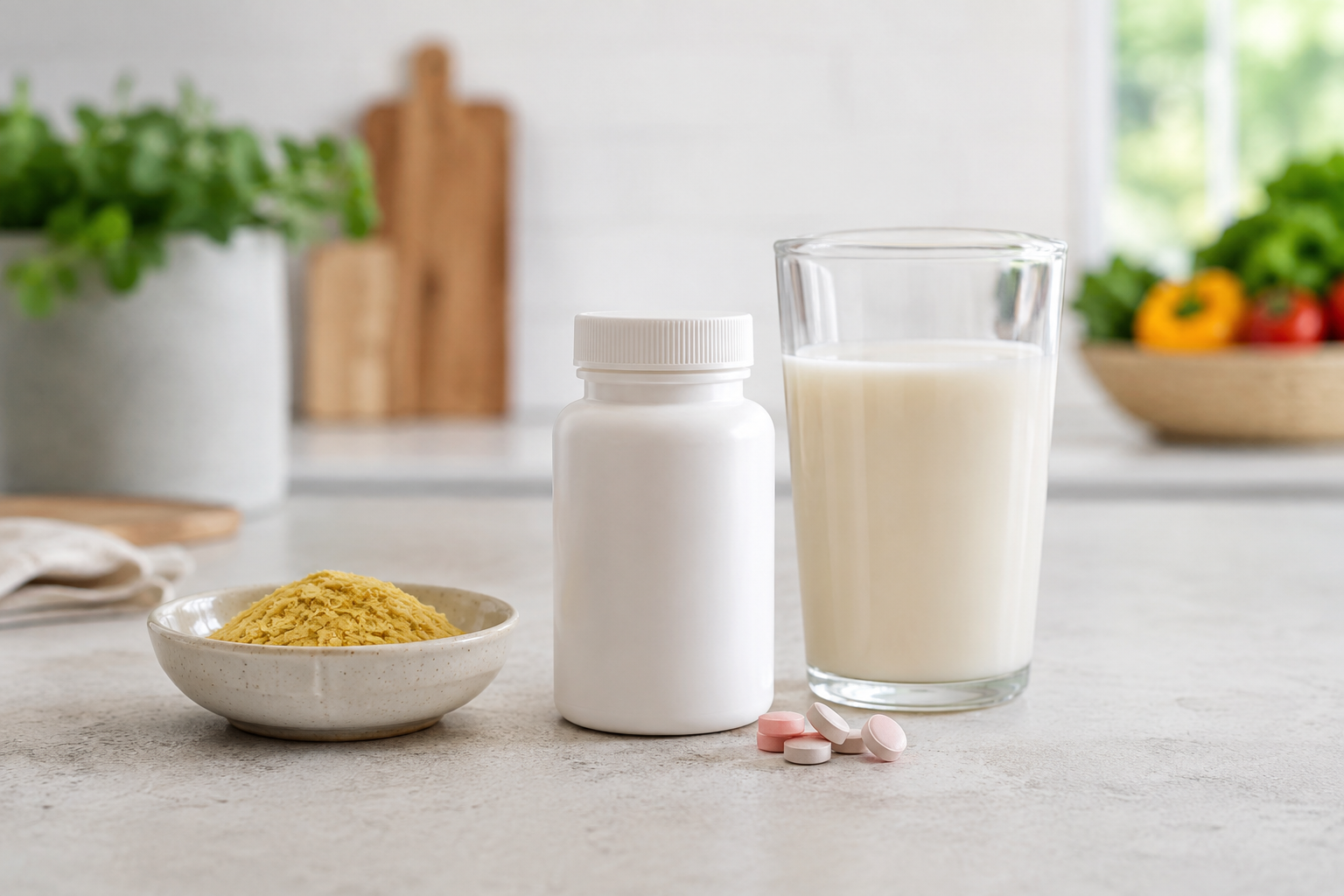
- A vitamin B12 supplement
- Foods specifically fortified with vitamin B12
- A combination of both
Fortified products may include certain plant milks, breakfast cereals, nutritional yeasts or meat alternatives. Availability and formulations vary in India, so the nutrition panel matters more than the category.
Do not assume that every carton of soy or oat milk contains B12. “Fortified” is not a universal recipe. Check the label each time a brand changes its packaging or formulation.
How much should you take?
This is where a blog should not pretend to be your doctor.
B12 supplements come in very different doses because the percentage absorbed changes with the quantity and frequency consumed. A tablet containing far more than the daily physiological requirement is not necessarily a mistake; only a fraction of a large oral dose may be absorbed.
The correct schedule depends on factors including your existing B12 level, age, diet, pregnancy, medication and ability to absorb the vitamin. Preventing deficiency is also different from treating a diagnosed deficiency.
A doctor or registered dietitian can recommend an appropriate product and schedule. If a blood test already shows deficiency—or you have neurological symptoms—you may need therapeutic tablets or injections rather than a general supermarket supplement.
Do not try to correct a serious deficiency using nutritional yeast alone.
Cyanocobalamin or methylcobalamin?
Both forms are widely sold.
Cyanocobalamin is stable, extensively studied and commonly used in supplements. Methylcobalamin is also biologically active and heavily marketed, often with claims that it is inherently “natural” or superior.
For most people, consistency and an adequate evidence-based dose matter more than fashionable language on the bottle. Specific medical conditions may change the recommendation, which is another reason to ask a qualified professional when treating deficiency.
Who should consider testing?
Testing may be particularly relevant if you:
- Follow a vegan or largely vegetarian diet without reliable supplementation
- Experience persistent fatigue, numbness, tingling or unexplained weakness
- Are pregnant, breastfeeding or planning a pregnancy
- Take medicines that can affect B12 absorption
- Have coeliac disease, Crohn’s disease or another absorption condition
- Have had gastrointestinal surgery
- Are an older adult
- Previously had low or borderline B12
A serum B12 result can be useful, although clinicians may consider additional markers when the result and symptoms do not tell the same story.
Never wait for severe symptoms simply to prove that diet is the cause.
Supplementation does not make veganism unnatural
People routinely use iodised salt, fortified flour, vitamin D, iron, folic acid and other public-health interventions. Modern diets already depend on agricultural systems, refrigeration, food processing and nutritional knowledge.
Taking B12 is not an ideological failure. Ignoring it to protect an image of dietary purity is unnecessary and potentially harmful.
The ethical case for avoiding animal harm does not require us to pretend that plants naturally provide every nutrient in every modern environment. It asks us to make compassionate choices while caring for our own bodies properly.
Take B12 seriously, choose a reliable source and seek professional help if you may already be deficient. It is one of the simplest ways to make a vegan diet safer for the long term.










Leave a Reply
Let us know what you think about the blog post above, we’re interested in hearing from you!