
No. Wool is not vegan because it is an animal-derived fibre taken from sheep. The same applies to cashmere from goats, mohair from Angora goats, alpaca fibre, angora from rabbits and pashmina, which is a type of cashmere.
Veganism is not only a diet. The Vegan Society’s definition includes avoiding animal exploitation for clothing and other purposes, which is why ethical vegans do not buy new wool.
Does shearing help sheep?
Modern wool sheep have been selectively bred to produce much more fleece than their wild ancestors. They may need shearing because humans created animals who no longer shed enough wool naturally. That need does not make the wool trade cruelty-free; it shows how dependent the animals have become on an industry designed around fibre production.
The question is not whether an individual sheep should be safely shorn when necessary. Of course they should. The question is whether animals should be bred, owned and managed so their bodies generate a saleable material.
What can happen in wool production?
Animal-welfare risks vary by farm and country, but industry standards themselves acknowledge serious concerns. Textile Exchange’s wool overview identifies practices such as mulesing, the removal or destruction of wool-bearing skin, as a concern in the sector.
Sheep may also undergo tail docking, castration, ear marking, transport and eventual slaughter. Fast shearing in commercial settings can create handling stress and accidental cuts. Even when better practices reduce suffering, the fibre still comes from an animal being used as a resource.
What does “responsible wool” mean?
The Responsible Wool Standard is a voluntary certification that covers animal welfare, land management, social requirements and chain of custody. Textile Exchange says RWS-certified farms are assessed against animal-welfare criteria and must not practise mulesing.
This may distinguish some wool from worse systems, but “responsible” does not mean vegan. Certification aims to improve how animal fibre is produced; vegan fashion replaces animal fibre altogether.
Which labels mean wool?
Check the fibre-content label and product description for:
- wool, virgin wool, lambswool or merino;
- cashmere or pashmina;
- mohair;
- alpaca;
- angora;
- camel hair;
- felt, unless it is clearly identified as synthetic or plant-based;
- lanolin, a waxy substance obtained from wool, in cosmetics and care products.
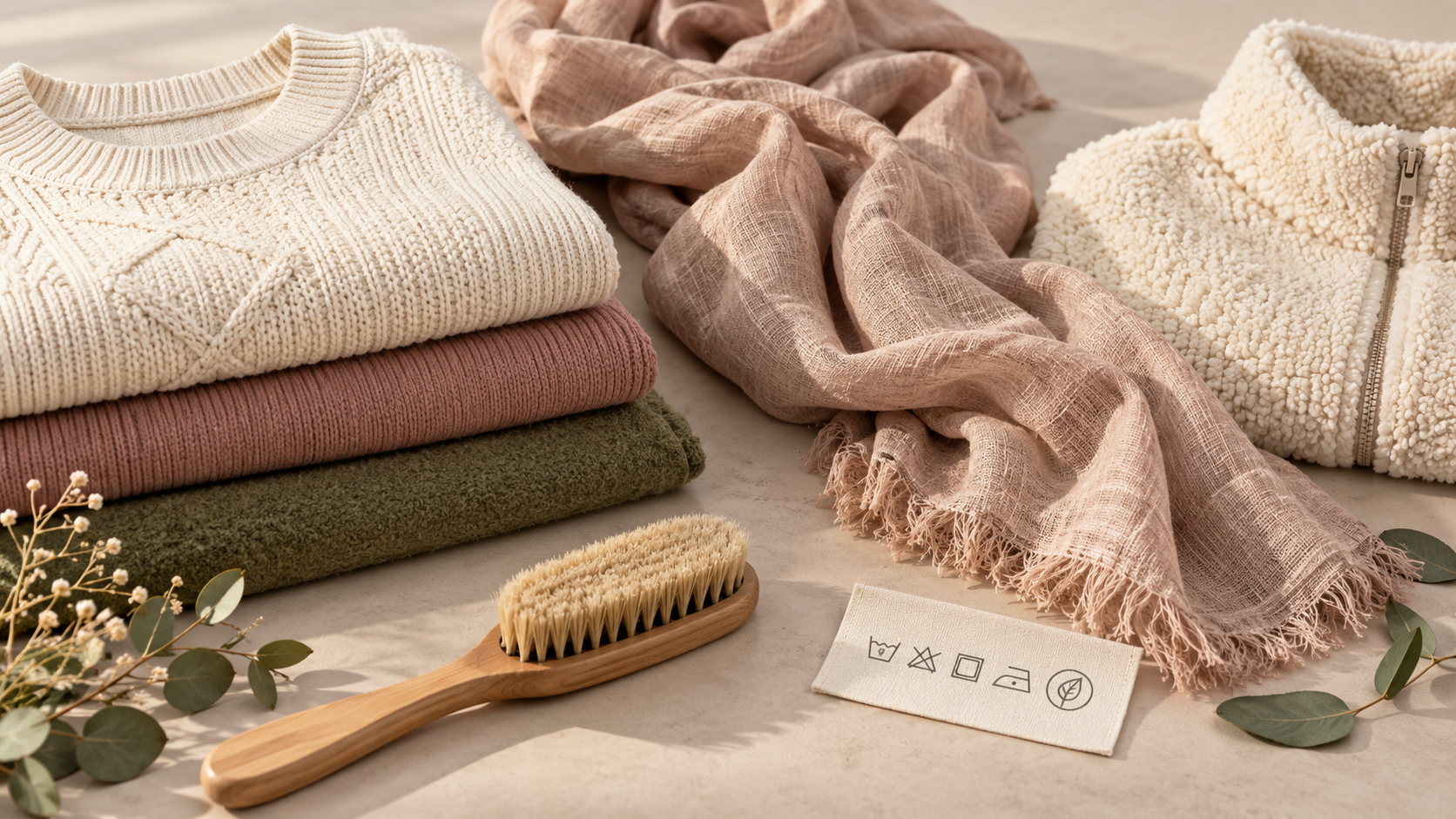
Blends matter. A jumper described as “cotton blend” may contain a small percentage of wool. Jacket linings, suit canvases, hat trims and shoe uppers can also hide animal fibre.

What are the best vegan alternatives to wool?
No single fibre is perfect for every climate or use, so choose according to warmth, durability, care and environmental impact.
- Organic or conventional cotton: breathable and widely available; heavier knits work well in mild Indian winters.
- Recycled cotton: can reduce demand for new fibre, though quality varies by blend and construction.
- Hemp and linen: durable plant fibres that are excellent for layering and warmer regions.
- Lyocell: a cellulose-based fibre with a soft drape; check the complete blend.
- Recycled polyester fleece: warm and lightweight, but still plastic-based. Buy durable pieces, wash less often and avoid unnecessary replacement.
- Acrylic: affordable and wool-like, although fossil-derived and prone to pilling in lower-quality garments.
- New plant-based insulation: kapok, cellulose and other animal-free fills may appear in jackets and bedding.
PETA’s wool-alternatives guide lists cotton, linen, lyocell and several synthetic options. The most sustainable choice is usually a well-made item you will wear repeatedly, care for properly and repair when needed.
Are synthetic alternatives automatically sustainable?
No. Animal-free answers the vegan question, not every environmental question. Polyester and acrylic are generally fossil-derived and can release microfibres. Cotton has its own land and water impacts, and poorly made garments of any fibre can become waste quickly.
Use a two-step test:
- Is it animal-free? Check fibre, trims, dyes, glue and lining where possible.
- Will it last? Look at knit density, seams, pilling, repairability, care needs and how often you will actually wear it.
Rejecting animal exploitation and demanding better materials are compatible goals. We do not need to defend wool in order to criticise disposable plastic fashion.
What about wool you already own?
People handle existing animal-derived clothing differently. Some continue wearing it until it wears out, because replacing a usable item creates new consumption. Others feel uncomfortable wearing it and donate, sell or repurpose it.
There is no benefit to sending a usable garment to landfill. Choose the approach that keeps you committed to not buying new animal fibre. If you donate an item, do so thoughtfully and replace it only when needed.
How to shop wool-free in India
- Read the sewn-in composition label, not only the front tag.
- Search product pages for “100% cotton”, “wool-free” or “vegan”, then confirm blends.
- Ask brands whether linings, trims, padding and adhesives contain animal materials.
- For shawls and suits, remember that “pashmina”, “cashmere”, “merino” and many felts are animal-derived.
- Prefer durable layers suited to your city instead of buying for an imagined climate.
- Use second-hand platforms for clearly animal-free pieces when practical.
A kinder wardrobe
Wool can look traditional, natural and harmless, but it still turns an animal’s body into a product. Vegan fashion asks a simple question: if warm, beautiful and functional alternatives exist, why keep using animals?
Continue with our guides to whether silk is vegan and how to choose vegan leather in India, then check your wardrobe one label at a time.

















Leave a Reply
Let us know what you think about the blog post above, we’re interested in hearing from you!