


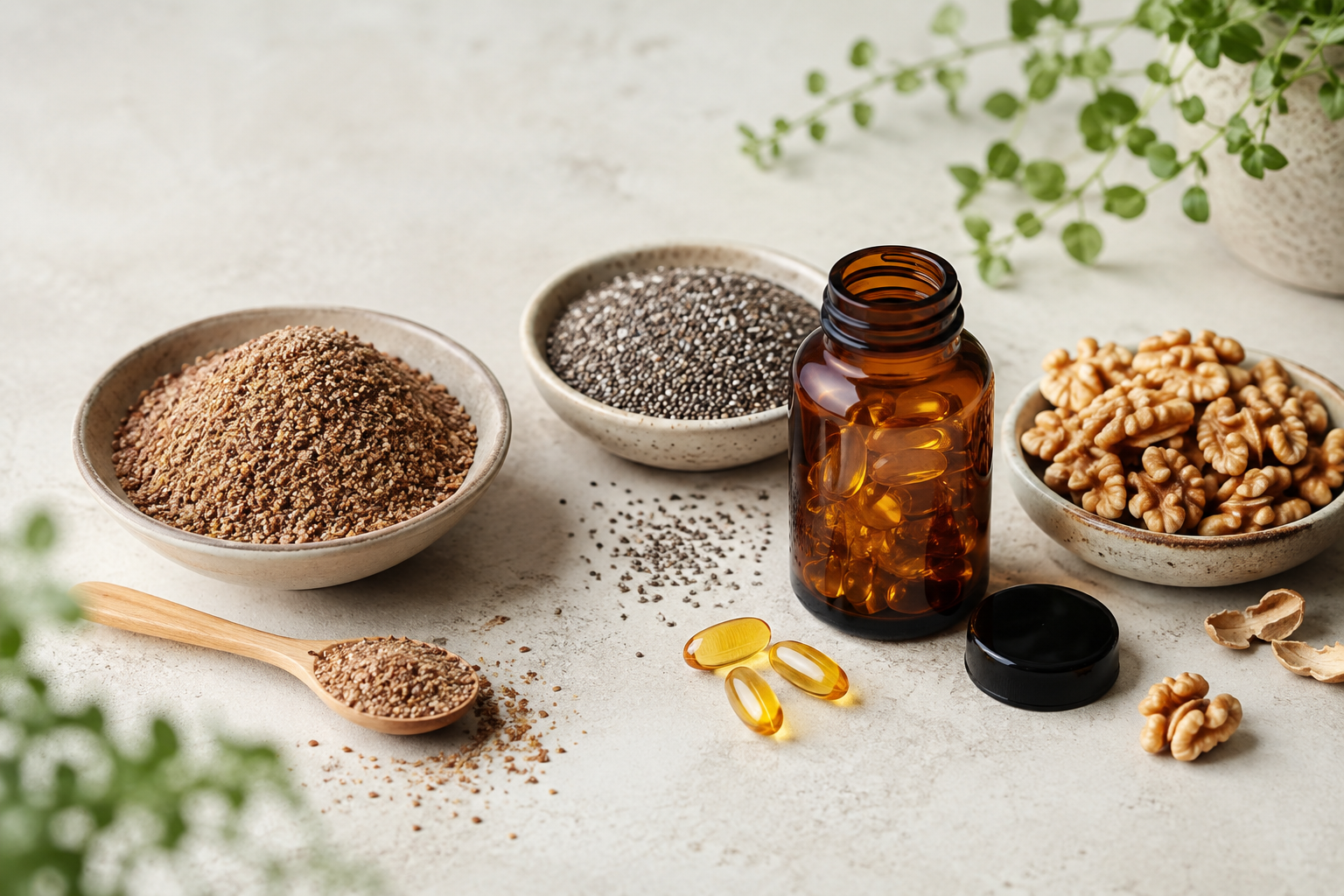
Omega-3 is often discussed as if it were one substance found exclusively in fish.
It is neither.
There are several omega-3 fatty acids, but three receive most of the attention: ALA, EPA and DHA. Plant foods such as flaxseed and chia provide ALA. Algae can supply DHA and, in some products, EPA.
Fish obtain their long-chain omega-3s through the aquatic food chain. Algae are the original source—which makes algae oil a useful direct option for people who do not eat fish.
ALA, EPA and DHA are not interchangeable
ALA is essential. The body can convert some ALA into EPA and then DHA, but conversion is limited. The US National Institutes of Health omega-3 fact sheet reports conversion rates below 15 per cent, with conversion to DHA generally smaller still.
That does not make flaxseed pointless. It means a tablespoon of flax should not automatically be described as nutritionally identical to a measured amount of algae-derived DHA.
Flaxseed
Flaxseed, or alsi, is one of the most practical ALA sources available in India. Use it ground rather than relying on whole seeds, which may pass through the digestive system largely intact. Add ground flax to oats, atta, chutney, smoothies or dosa batter.
Chia seeds
Chia also supplies ALA and works in oats, puddings, drinks or yoghurt alternatives. Soak it before consuming large amounts, particularly if you have difficulty swallowing. Flax is often cheaper and deserves considerably more respect than it receives from fashionable cafés.
Walnuts
Walnuts contribute ALA alongside protein, fibre and other fats. Use them if you enjoy and can afford them, but do not assume they are compulsory.
Soy foods and certain vegetable oils
Soybeans, soybean oil and canola oil contain ALA. Their contribution depends on the whole eating pattern, quantity and cooking method.
Hemp seeds
Hemp seeds provide ALA and protein, although they are less familiar and usually more expensive in India. Flaxseed remains a very practical starting point.
What about algae oil?
Algae oil provides preformed DHA, and some formulations include EPA. Research indexed through PubMed found that algal DHA supplementation consistently increased DHA levels in the body.
When comparing products, check the actual amount of DHA and EPA—not merely “algae oil”—whether the capsule shell is vegan, added flavours and allergens, storage instructions, batch testing and manufacturer details.
Do not choose a supplement based only on a large number printed on the front. It may refer to total oil rather than active omega-3 content.
Does every vegan need an algae supplement?
There is no honest universal answer. Pregnancy, breastfeeding, cardiovascular conditions, medicines and individual health risks can change the conversation. Anyone using anticoagulant medicine or considering high-dose omega-3 should seek professional guidance.
A practical plant-based routine
An uncomplicated approach might include ground flaxseed most days, with chia, walnuts or soy foods providing variety. Then consider algae-derived DHA and EPA according to your life stage, diet and professional advice.
Omega-3 nutrition does not need to become another purity contest. Use familiar food sources consistently, understand what ALA can and cannot do, and choose a clearly labelled algae product if a direct source of DHA or EPA is appropriate for you.













Leave a Reply
Let us know what you think about the blog post above, we’re interested in hearing from you!