


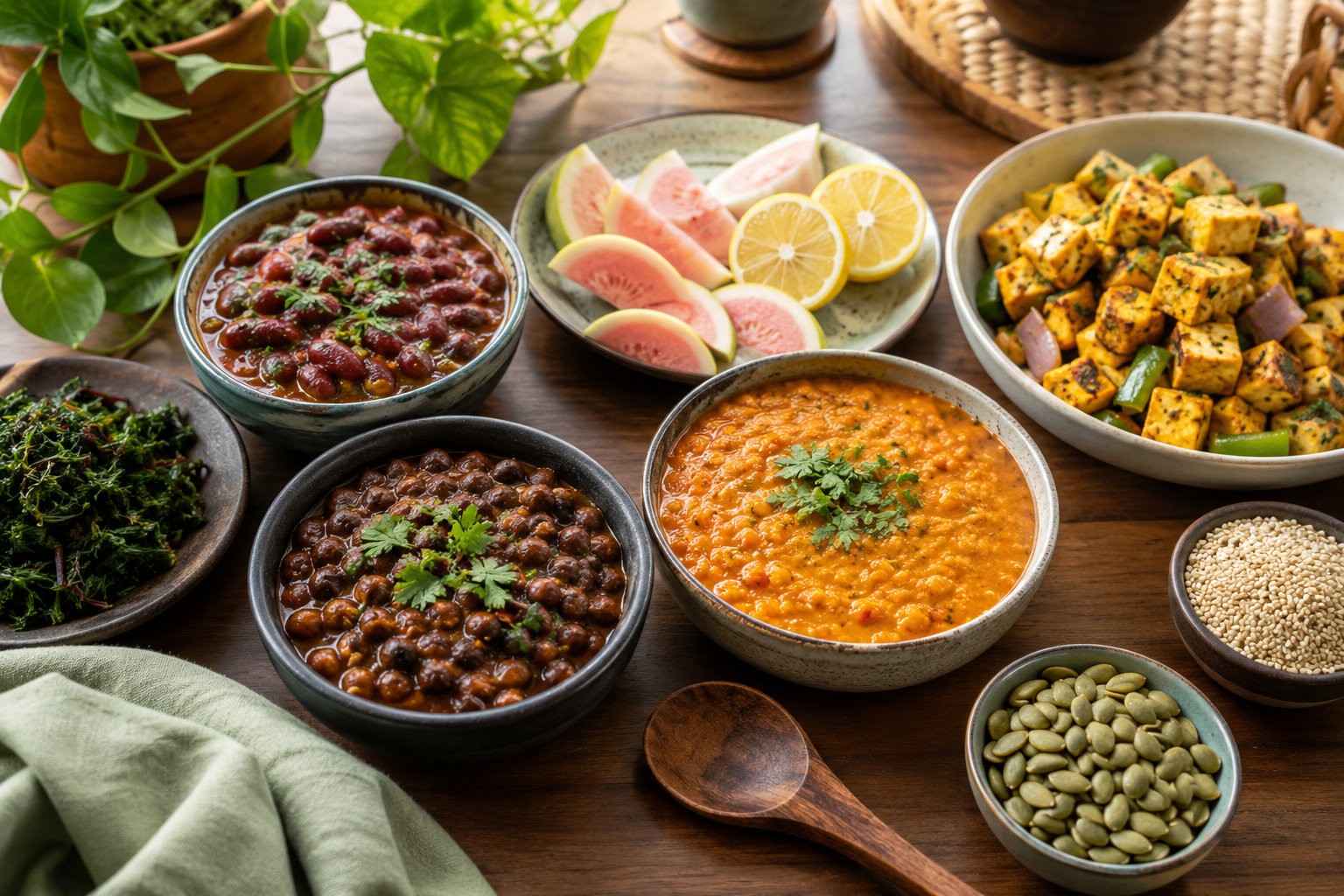
One of the most common myths about the vegetarian and vegan movement is that getting enough protein is either incredibly difficult, wildly expensive, or both. But the truth? India is historically and culturally uniquely positioned to support a high-protein, plant-based diet without breaking the bank.
India's rich culinary heritage has the solution. Long before the advent of protein shakes, staple dishes such as dal-chawal, roti-sabzi, and chana were effectively fulfilling nutritional requirements in a balanced and cost-effective manner. The issue we face today is not a shortage of choices, but rather a deficiency in awareness.
Part 1: How to Calculate Your Daily Protein Requirement
You don't need to guess how much protein your body needs in a day. It strictly depends on your weight, age, and lifestyle. The golden rule is to calculate based on your body weight in kilograms (kg).
The Math:
Your Body Weight (in kg) × Activity Multiplier = Daily Protein in Grams
1. The Sedentary Adult (Baseline)
If you have a desk job and do little to no structured exercise, your requirement is the baseline recommended dietary allowance (RDA).
- Multiplier: 0.8 grams to 1.0 gram per kg of body weight.
- Example: A 65 kg person needs roughly 52g to 65g of protein per day.
2. The Active Adult
If you walk a lot, do light jogging, yoga, or play casual sports a few times a week, your body needs more protein to recover.
- Multiplier: 1.0 grams to 1.2 grams per kg of body weight.
- Example: A 65 kg person needs roughly 65g to 78g of protein per day.
3. The Muscle Builder or Athlete
If you lift weights, do intense resistance training, or are an athlete, your muscle fibers require significantly more protein to rebuild and grow.
- Multiplier: 1.2 grams to 1.6 grams (and sometimes up to 2.0g) per kg of body weight.
- Example: A 65 kg person needs roughly 78g to 104g of protein per day.
4. Seniors (65+ years)
As we age, we naturally lose muscle mass (a condition called sarcopenia). Older adults actually need more protein than younger sedentary adults to maintain their strength.
- Multiplier: 1.0 grams to 1.2 grams per kg of body weight.
Tip: Don't obsess over hitting the exact gram every single day. Look at your average intake over the course of a week.
Part 2: Top Budget-Friendly Vegan Proteins in India
You don't need imported protein powders or expensive exotic seeds to hit your daily goals. Your local kirana store is packed with high-protein powerhouses.
Here is a breakdown of the cheapest, most effective plant-based proteins available in India (Note: Protein content for grains and legumes is measured by their raw/uncooked weight).
Part 3: Busting the "Complete Protein" Myth
One of the biggest concerns new vegans have is the "incomplete protein" myth.
Proteins are made of amino acids. While animal products contain all 9 essential amino acids in one package (a "complete" protein), many plant foods might be slightly low in one or two.
The Reality: You do not need to eat all essential amino acids in a single bite or even a single meal. Your liver stores amino acids over the course of the day. As long as you eat a variety of plant foods, your body mixes and matches them perfectly.
Furthermore, traditional Indian diets are naturally designed to create complete proteins. The classic combinations of Dal-Chawal (Lentils + Rice) or Roti-Dal (Wheat + Lentils) naturally complement each other to form a complete amino acid profile!
Part 4: Smart Hacks for the Budget Vegan
Getting enough protein on a budget isn't just about what you buy, it's about how you prepare it.
- Sprout Everything: Sprouting moong, kala chana, and moth beans costs absolutely nothing, but it significantly increases the bioavailability of the protein and makes the nutrients easier for your body to absorb.
- Make Your Own Milks & Butters: Store-bought vegan milk and peanut butter can be heavily marked up. Blend 1 cup of soaked oats or soybeans with water for cheap milk. Roast peanuts and throw them in a mixer until they turn into butter zero added cost, zero preservatives.
- The Power of Besan & Sattu: Gram flour (besan) and roasted gram flour (sattu) are native, incredibly cheap, and high in protein. A glass of sattu sherbet or a couple of besan chillas for breakfast is an immediate, cost-effective protein boost.
- Buy in Bulk: Skip the shiny, branded packets of dal and rice. Buy your grains, legumes, and soya chunks loose from wholesale markets or local grain mandis to cut costs by 20-30%.
So, the final verdict is that transitioning to a vegan lifestyle in India does not require an elite budget. By doing a little bit of math and relying on our rich, native agricultural staples, hitting your daily protein targets is not just achievable it's incredibly delicious.
AUTHOR: - RAVINANDAN BAJPAI
B.B.A. LL. B(HONS.),
School of Law, University of Mumbai










Leave a Reply
Let us know what you think about the blog post above, we’re interested in hearing from you!