


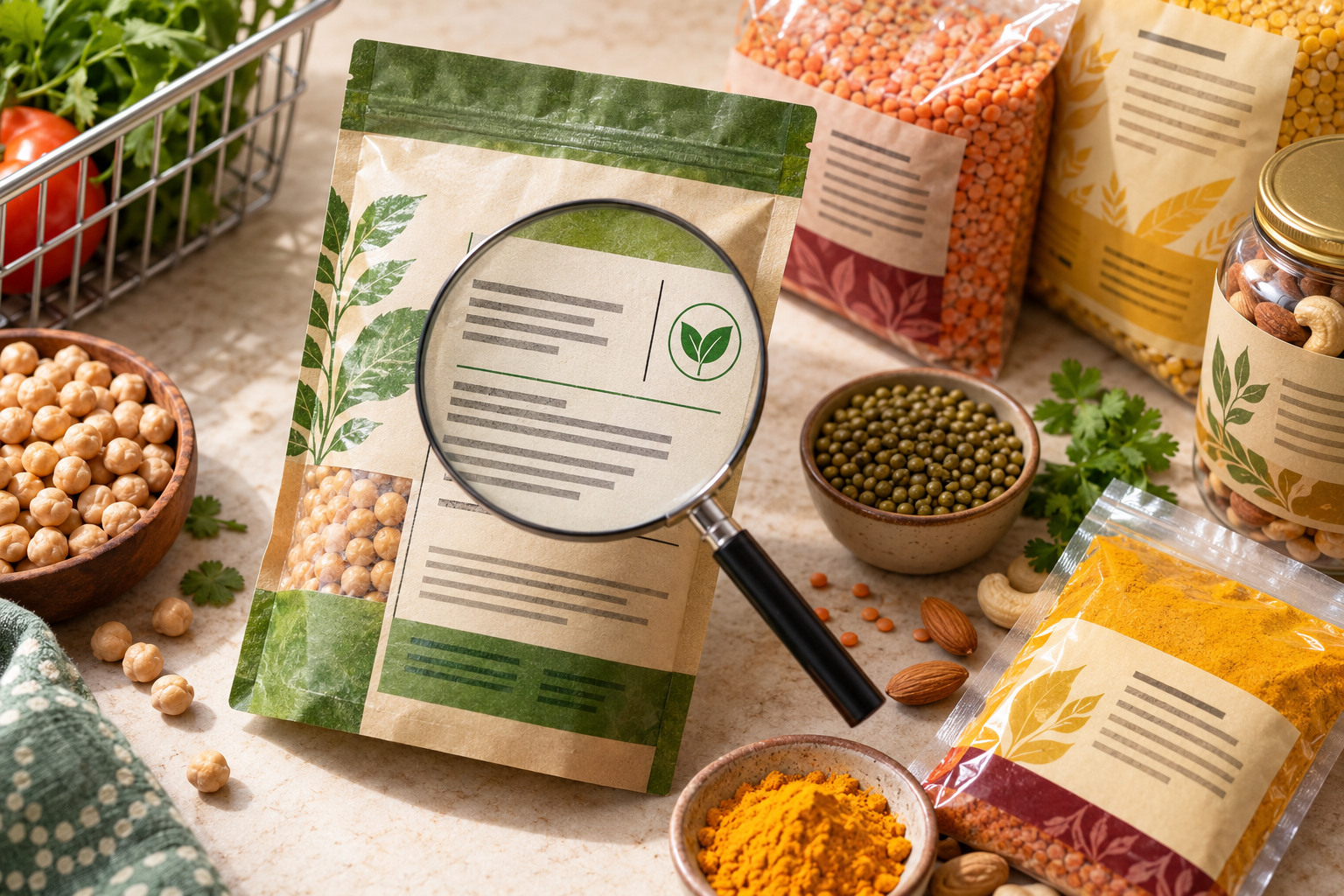
Reading a food label should make vegan shopping easier, not turn every supermarket visit into detective work. In India, the first important distinction is this: the familiar green vegetarian symbol does not guarantee that a product is vegan. Vegetarian foods may still contain milk, ghee, whey, casein, honey or other animal-derived ingredients.
India also has a separate regulatory framework for vegan foods. The Food Safety and Standards Authority of India (FSSAI) publishes the Vegan Foods Regulations and related guidance. A product carrying the official vegan logo has gone through a specific approval process; a green vegetarian mark alone means something different.
Start with the front, but decide from the back
Words such as “plant-based”, “natural”, “dairy-free”, “eggless” and “vegetarian” can be useful clues, but none should replace the ingredients list. “Dairy-free” may refer only to one formulation or claim, “eggless” says nothing about milk, and a vegetarian product can contain several dairy ingredients.
Use the front of the pack to shortlist. Use the ingredients and allergen statements to decide.
A 30-second label scan
- Look for the official vegan logo. If present, confirm that it applies to the actual product and variant in your hand.
- Read the complete ingredients list. Ingredients are generally declared in descending order by weight, so the first few usually tell you what the product is mostly made from.
- Check the allergen statement. “Contains milk” or “contains egg” is an immediate answer. “May contain” is a separate cross-contact warning, not an intentional ingredient.
- Scan compound ingredients. Chocolate chips, flavour mixes, seasoning powders, bread crumbs and premixes can each contain several sub-ingredients.
- Check the manufacturer’s current information. Recipes change. If the source of an additive or flavour is unclear, contact the company and save the answer.
The official vegan mark and the green vegetarian mark
Under India’s Vegan Foods Regulations, 2022, a food represented as vegan must not contain animal-origin ingredients, additives, processing aids or derivatives, and must meet requirements intended to address cross-contamination. FSSAI separately sets out an official vegan logo for approved packaged foods.
The green vegetarian symbol has a broader meaning. It can appear on a paneer snack, milk chocolate or ghee biscuit because those foods are vegetarian under Indian labelling rules. For vegan shoppers, green is a useful first filter—but it is not the final check.

Animal-derived ingredients that are easy to miss
- Milk in many forms: milk solids, skimmed milk powder, whey, whey protein, casein, caseinate, lactose, butterfat, cream, ghee and cultured milk solids.
- Egg: egg powder, albumen, ovalbumin, mayonnaise and some glazes or bakery improvers.
- Gelatine: used in gummies, marshmallows, capsules, desserts and some confectionery.
- Honey, beeswax and shellac: found in foods, glossy confectionery coatings, supplements and personal-care products.
- Carmine or cochineal: a red colour made from insects.
- Fish- or animal-based seasonings: fish sauce, oyster sauce, meat stock, anchovy flavouring and some instant-noodle or snack seasonings.
- Vitamin D3 and some additives: these can come from animal or non-animal sources, so the name alone may not settle the question.
Do not panic over every long chemical name. Many additives are fully synthetic or plant-derived. The honest answer for ingredients with variable sources is to check for credible vegan certification or ask the manufacturer.
What “may contain milk” actually means
A “may contain” statement normally warns about accidental cross-contact in a shared facility; it does not list an ingredient deliberately added to the recipe. Vegans make different personal decisions about these warnings. From an ethical perspective, choosing a product made without animal ingredients does not create demand for milk or egg in the same way that buying a product containing them does.
People with allergies must follow medical advice and treat cross-contact warnings as a safety issue, not an ethical preference.
Common India-specific traps
- Namkeen and chips: masala blends may contain milk solids, whey or cheese powder.
- Bakery foods: “eggless” cakes, breads and biscuits may still contain butter, milk powder, whey or casein.
- Instant drinks: tea, coffee and chocolate premixes often include milk solids or caseinate.
- Mithai: ghee, khoya, milk powder, paneer or chhena may be integral even when the sweet looks dry.
- Restaurant gravies: makhani, shahi, korma and “creamy” dishes may use butter, cream, curd or cashew—or a mixture. Ask specifically.
- Supplements: capsules may contain gelatine, and vitamin sources or flavour carriers may vary.
Questions that get a clear answer
Instead of asking only “Is this vegan?”, ask: “Does this contain milk, ghee, butter, cream, curd, paneer, whey, casein, egg, honey, gelatine, fish sauce or any animal-derived flavour?” In a restaurant, also ask what the food is cooked in and whether butter or ghee is added at the end.
For packaged foods, send the product name, flavour, batch details and a photo of the ingredients panel to the manufacturer. Ask whether any flavour, processing aid, glazing agent or vitamin is animal-derived.
Your simplest shopping rule
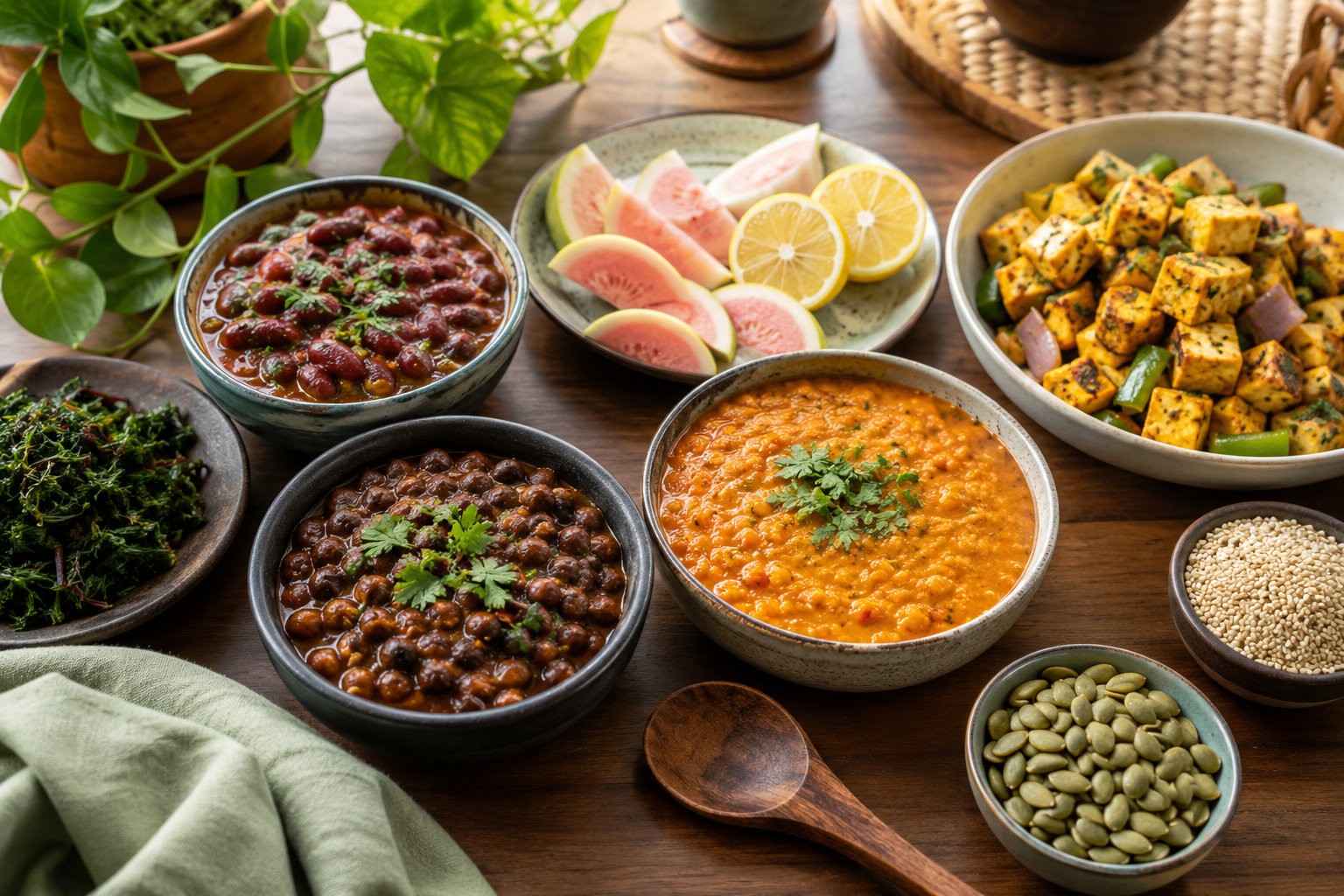
Choose foods whose ingredients you can understand, prefer the official vegan mark when available, and do not confuse vegetarian with vegan. Build most meals from naturally vegan staples—dal, beans, grains, vegetables, fruits, nuts, seeds, tofu and soy foods—then use label skills for the packaged extras.
New to the transition? Continue with our guides to vitamin B12 on a vegan diet, vegan calcium sources in India and what the research says about soy.
The bottom line
India’s green vegetarian mark is not a vegan mark. Check the ingredients, allergen statement and compound ingredients; learn the most common dairy, egg and animal-derived terms; and use FSSAI’s official vegan logo as stronger confirmation when it is present. A label check becomes quick with practice—and every confident choice helps make compassionate food feel ordinary.
















Leave a Reply
Let us know what you think about the blog post above, we’re interested in hearing from you!