


No. Traditional ghee is not vegan because it is made from milk fat. It may contain very little lactose or milk protein after clarification, but removing water and milk solids does not change its origin: ghee begins as dairy.
India’s food regulator classifies ghee with milk-fat products, and FSSAI’s standards cover ghee and other milk fats. So a jar labelled simply “ghee” should be understood as an animal-derived product unless it clearly says it is a plant-based alternative.
Why is ghee not vegan?
Veganism avoids products derived wholly or partly from animals. Dairy depends on cows or buffaloes producing milk after pregnancy. In commercial systems, mother and calf are routinely separated so milk can be collected for people. Clarifying butter concentrates the fat; it does not remove that ethical link.
“Lactose-free” is therefore not the same as vegan. A person avoiding lactose for digestion may tolerate some ghee, but someone choosing vegan food avoids it because it is dairy.
What can replace ghee in Indian cooking?
The best swap depends on what the ghee is doing in the recipe.
- For tadka and everyday sautéing: groundnut, mustard, sesame, rice-bran, sunflower, soybean or canola oil can work. Choose according to regional flavour and cooking temperature.
- For biryani, pulao and rich gravies: a neutral oil plus toasted cashew paste, coconut milk or a small amount of vegan butter can provide richness.
- For rotis and parathas: brush with a little neutral oil or a clearly labelled dairy-free spread.
- For mithai: vegan butter, refined coconut oil, nut pastes or neutral oil may work depending on whether the recipe needs firmness, aroma or moisture.
- For baking: use plant-based butter when solid fat is structurally important; use liquid oil when the recipe permits.
Which plant oil is healthiest?
There is no universal “best” oil for every person and every dish. But public-health guidance is clear about the broad direction. The World Health Organization recommends favouring unsaturated fats and specifically lists ghee among saturated-fat sources that can be replaced with oils rich in unsaturated fat.
For routine cooking, WHO highlights options such as soybean, canola, corn, safflower and sunflower oils. Groundnut, sesame and olive oil can also fit well depending on the preparation and your overall diet.

Is coconut oil a healthy ghee replacement?
Coconut oil is vegan and useful when you want a firm fat or a distinct coconut flavour. However, it is high in saturated fat. The American Heart Association recommends non-tropical vegetable oils over solid fats and tropical oils for everyday heart-health choices.
That does not mean a spoonful of coconut oil makes a recipe “unhealthy”. It means coconut oil should not automatically be marketed as a nutritional upgrade from ghee. Use it for flavour or function, and choose unsaturated oils more often.
Can “vegetable ghee” be vegan?
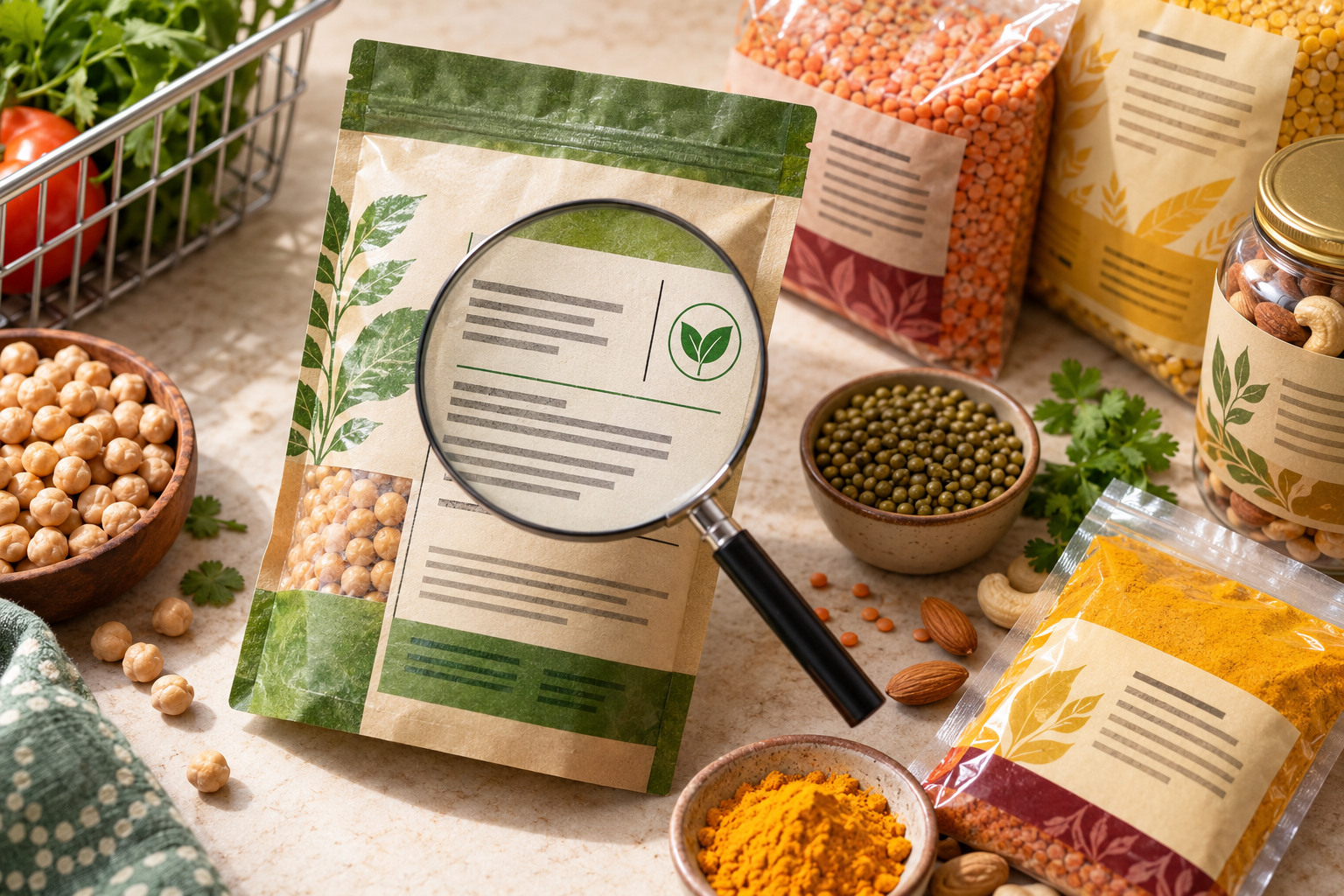
Sometimes, but the words alone are not enough. Historically, “vegetable ghee” may refer to vanaspati or hydrogenated vegetable fat. Check:
- the complete ingredient list;
- whether milk solids, butter flavour, whey, casein or other dairy-derived ingredients appear;
- the saturated-fat and trans-fat values;
- whether the product uses partially hydrogenated oil;
- a clear vegan mark or manufacturer confirmation.
The WHO explains that industrial trans fats can form when vegetable oil is partially hydrogenated. “Plant-based” does not make trans fat desirable.
A simple homemade aromatic vegan “ghee” oil
For a ghee-like finishing aroma, gently warm a neutral oil with a small piece of cinnamon, one crushed green cardamom pod and a pinch of turmeric. Switch off the heat, allow the spices to infuse, then strain. For savoury dishes, curry leaves or cumin can create a different aromatic profile.
This will not behave exactly like dairy ghee in every sweet or pastry, but it can add warmth to dal, rice, khichdi and roasted vegetables without using milk.
Shopping checklist in India
- Look for “vegan” or “dairy-free”, not merely “lactose-free”.
- Read allergen statements for milk.
- Check saturated fat and avoid partially hydrogenated oil.
- Choose the fat for the cooking job rather than chasing one miracle product.
- Use small amounts: all oils are energy-dense.
The compassionate choice
Indian food does not lose its soul without ghee. Our cuisines already use mustard, sesame, coconut and groundnut oils, along with nuts, seeds and spices, to create extraordinary flavour.
If you are preparing for the festive season, see our vegan Diwali guide and browse vegan recipes for dairy-free sweets and savoury dishes.















Leave a Reply
Let us know what you think about the blog post above, we’re interested in hearing from you!