

No, vegan cheese has not simply been “banned” in India.
The confusion comes from several different issues being collapsed into one headline: action against adulterated dairy products, naming rules for plant-based alternatives, food-safety requirements and changes to how some products may be marketed.
Those are real regulatory questions. But they do not mean that every intentionally dairy-free cheese alternative is illegal, unsafe or fraudulent.
Fake paneer is not the same as vegan paneer
When a manufacturer sells a product as dairy paneer while secretly replacing milk fat or protein with cheaper ingredients, that is adulteration. The buyer believes they are purchasing one product and receives another.
A clearly labelled plant-based paneer alternative is different. It is deliberately made without dairy for consumers who want that choice. The ethical and legal issue is transparency: what is in the product, how is it described, and could a reasonable buyer mistake it for dairy?
Why the language matters
Food regulators have a legitimate role in preventing misleading claims. Names, packaging, shelf placement and advertising should make it clear when a product is non-dairy.
At the same time, regulation should not make plant-based food impossible to describe. Consumers understand terms such as “plant-based cheese alternative” when the non-dairy nature is prominent. Clear qualifiers can protect shoppers without pretending that alternatives do not exist.
Plant-based does not automatically mean healthy
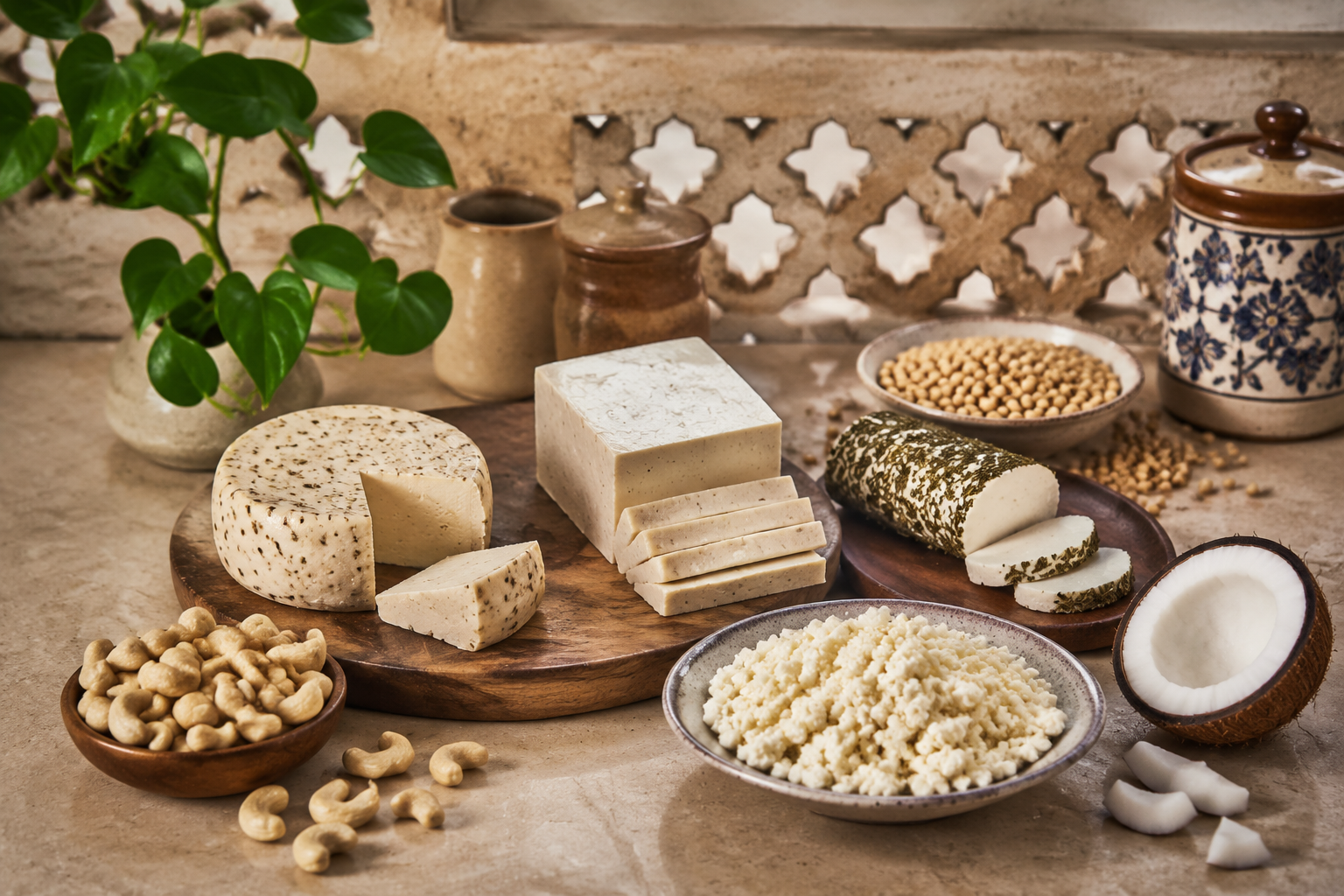
Some dairy-free cheeses are made primarily from coconut oil and starch. Others use cashews, soy, seeds or fermentation. Their protein, saturated fat, sodium and micronutrient profiles can differ enormously.
A vegan label answers an ethical ingredient question. It does not answer every nutritional question.
Manufacturers should avoid imagery or wording that could mislead, maintain proper records, test products and communicate allergens clearly.
If a product is mostly coconut oil and starch, say so. If it is made from cashews, watermelon seeds or soy, say that too. “Plant-based” should never become a shield against questions about saturated fat, protein, additives or food safety.
What consumers should check
- The full ingredient list
- Protein and saturated-fat content
- Major allergens such as cashew, soy or coconut
- Storage and refrigeration instructions
- Manufacturing and licence details
- Whether the packaging clearly identifies it as non-dairy
- Current availability and regulatory status in your state
Avoid purchasing unlabelled products whose manufacturer, ingredients or storage history cannot be identified.
This conversation needs more honesty
Passing off a cheap substitute as dairy paneer is consumer fraud. It should be addressed.
But using that fraud to suggest that every deliberately vegan product is fake, dangerous or pointless is equally unhelpful. Plant-based consumers deserve safe products, transparent labels and regulations that distinguish intentional alternatives from adulteration.
The best outcome is not confusion that drives people back to dairy. It is a credible plant-based sector with standards strong enough to earn trust.
Kindness Media will continue monitoring these rules as official guidance develops. In the meantime, explore our clearly explained dairy replacements and plant-based recipes—and always check the label of the product actually in front of you.











Leave a Reply
Let us know what you think about the blog post above, we’re interested in hearing from you!