

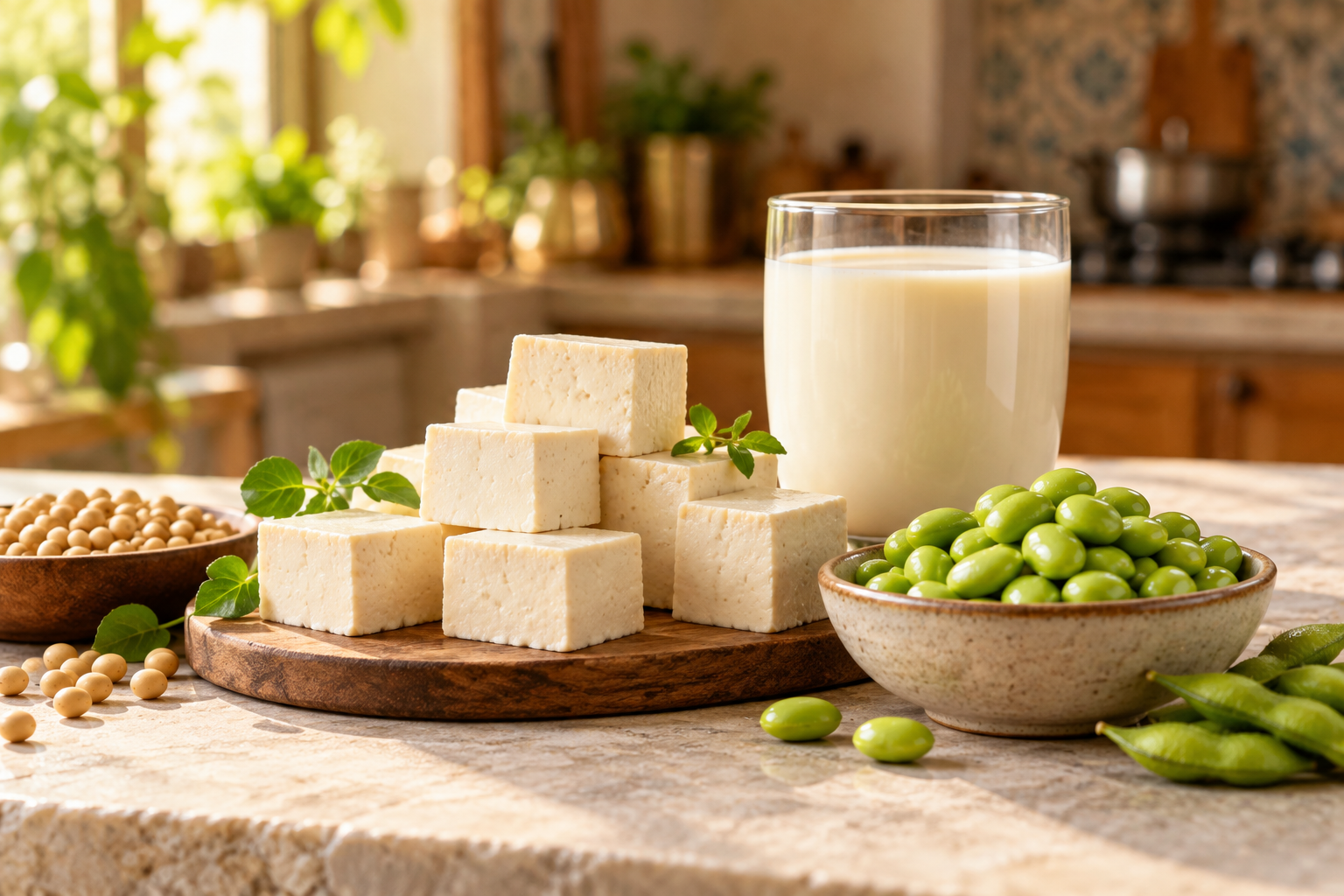
Soy is one of the most persistent targets of nutrition misinformation. The claim usually sounds scientific: soy contains “phytoestrogens”, therefore tofu, soy milk or tempeh must raise human oestrogen, lower testosterone or “feminise” men.
That conclusion does not follow from the evidence. Phytoestrogens are plant compounds, not human oestrogen, and their effects depend on dose, metabolism and the receptors with which they interact.
The short answer
For most adults, normal consumption of soy foods does not meaningfully raise oestrogen or lower testosterone. A 2021 meta-analysis of 41 clinical studies found that neither soy protein nor isoflavone exposure affected total testosterone, free testosterone, estradiol or estrone in men. Read the study on PubMed.
That is a much stronger form of evidence than a viral anecdote, a rodent experiment using an extreme dose, or a single case report.
Why “phytoestrogen” is a confusing word
Soy contains isoflavones, including genistein and daidzein. Their molecular shapes allow them to interact with oestrogen receptors, but they bind differently and far more weakly than the body’s principal oestrogen, estradiol.
They can behave differently in different tissues. Describing them simply as “plant oestrogen” encourages people to imagine they are equivalent to taking human hormones. They are not.
Does soy lower testosterone in men?
The best available clinical synthesis says no. The 2021 analysis included studies across a range of soy foods and isoflavone doses and found no significant effect on the reproductive hormones measured.
That does not mean that every food suits every person or that dose never matters. Soy is a recognised allergen, and anyone with an allergy should avoid it. People receiving treatment for a medical condition should follow their clinician’s individual advice. But the general claim that ordinary soy consumption lowers testosterone is not supported.
What about women?
Hormonal health is not one number. Menstrual status, life stage, medicines and health conditions all matter. Research on soy and women has examined menopausal symptoms, fertility and breast health, but it does not support treating tofu or soy milk as if they were hormone medication.
If you have an oestrogen-sensitive condition, are pregnant, are trying to conceive or use thyroid medication, discuss your complete diet and medicines with a qualified clinician. That is personalised care—not proof that soy is inherently unsafe.
Does soy affect the thyroid?
Soy foods do not “destroy” a healthy thyroid. The more practical issue is that soy, fibre, calcium and several other foods or supplements can interfere with absorption of levothyroxine when taken too close to the medication. Follow the timing instructions from your prescriber or pharmacist rather than removing a nutritious food without reason.
Is Indian soy highly processed?
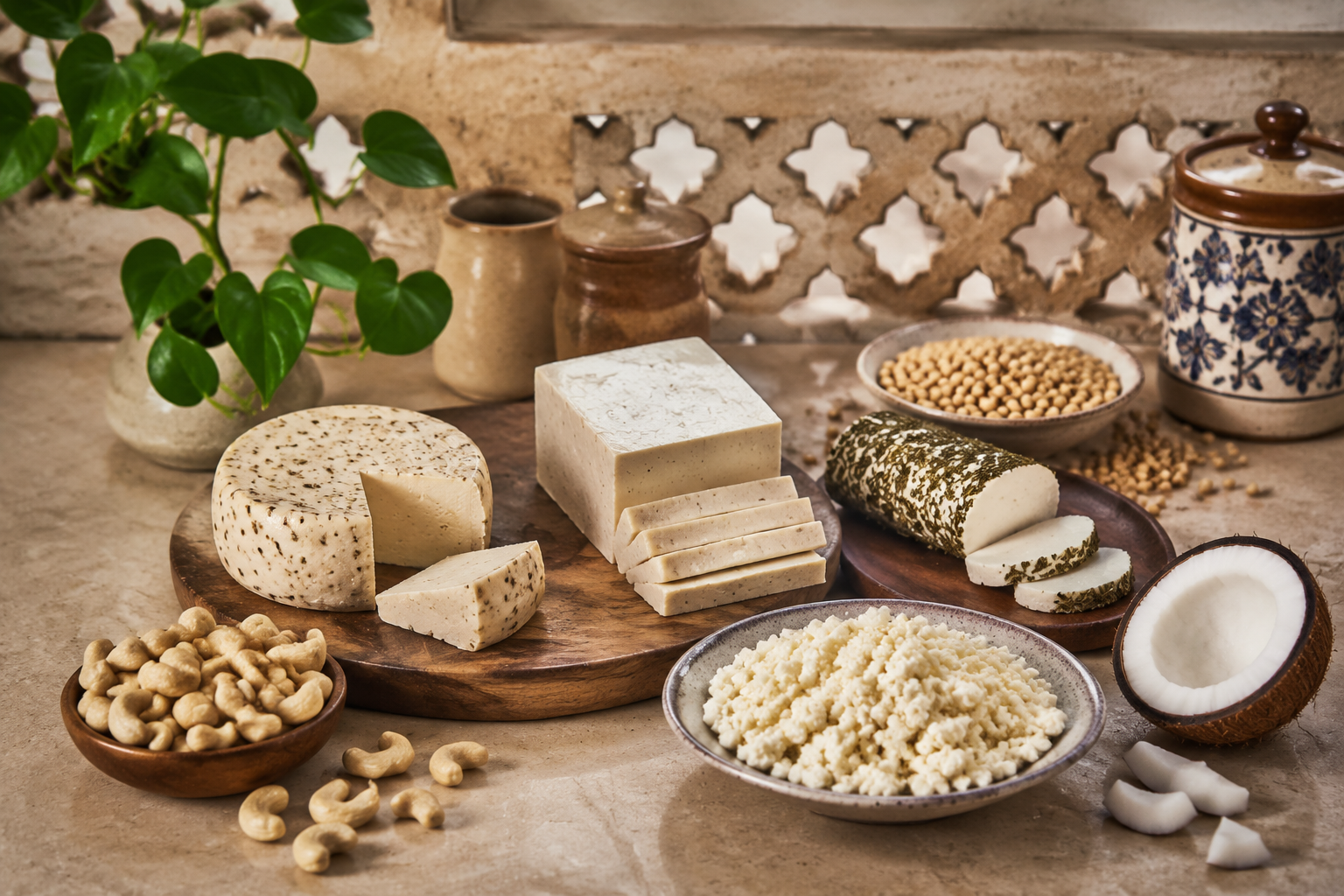
Soy is not one product. Edamame, tofu, tempeh, soy milk, soy chunks and protein isolates differ in texture, ingredients and processing. Processing is not automatically harmful: cooking lentils, setting tofu and fermenting tempeh are all forms of processing.
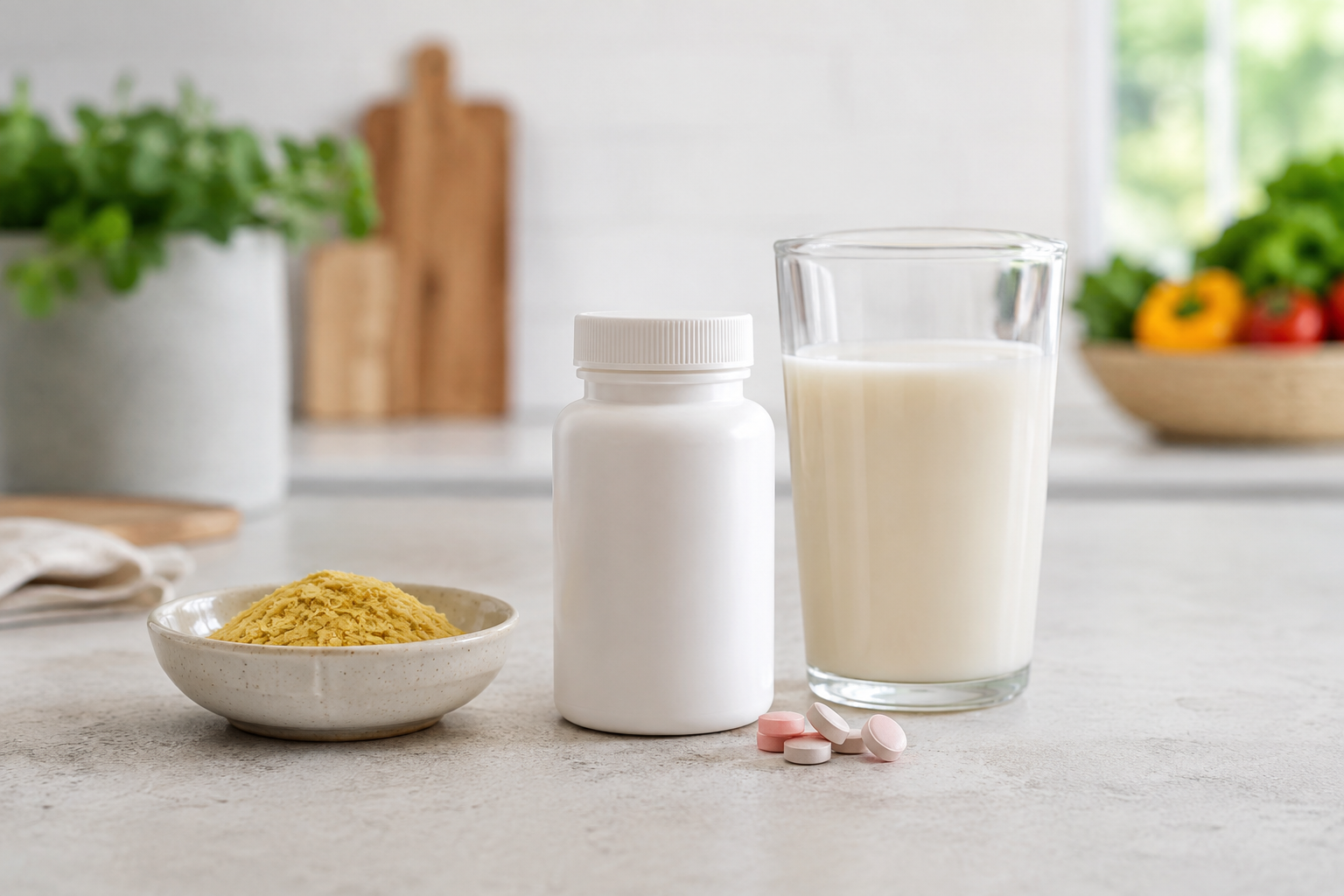
Choose products according to your needs. For fortified soy milk, check calcium, vitamin B12 and vitamin D. For packaged soy chunks or mock meats, compare sodium and the full ingredient list. The NHS includes fortified soya drinks and yoghurts in its guidance for a balanced vegan diet.
Why soy is useful in a vegan diet
Soy provides high-quality protein and can make satisfying meals remarkably easy. Tofu works in bhurji, curries and stir-fries; tempeh offers a firmer fermented option; soy milk can replace dairy in tea, coffee, porridge and baking.
It also lets us obtain protein without breeding, separating and slaughtering animals for food. For people choosing veganism for animals, that ethical difference matters.
What should you actually do?
- Eat soy foods in ordinary food amounts if you enjoy and tolerate them.
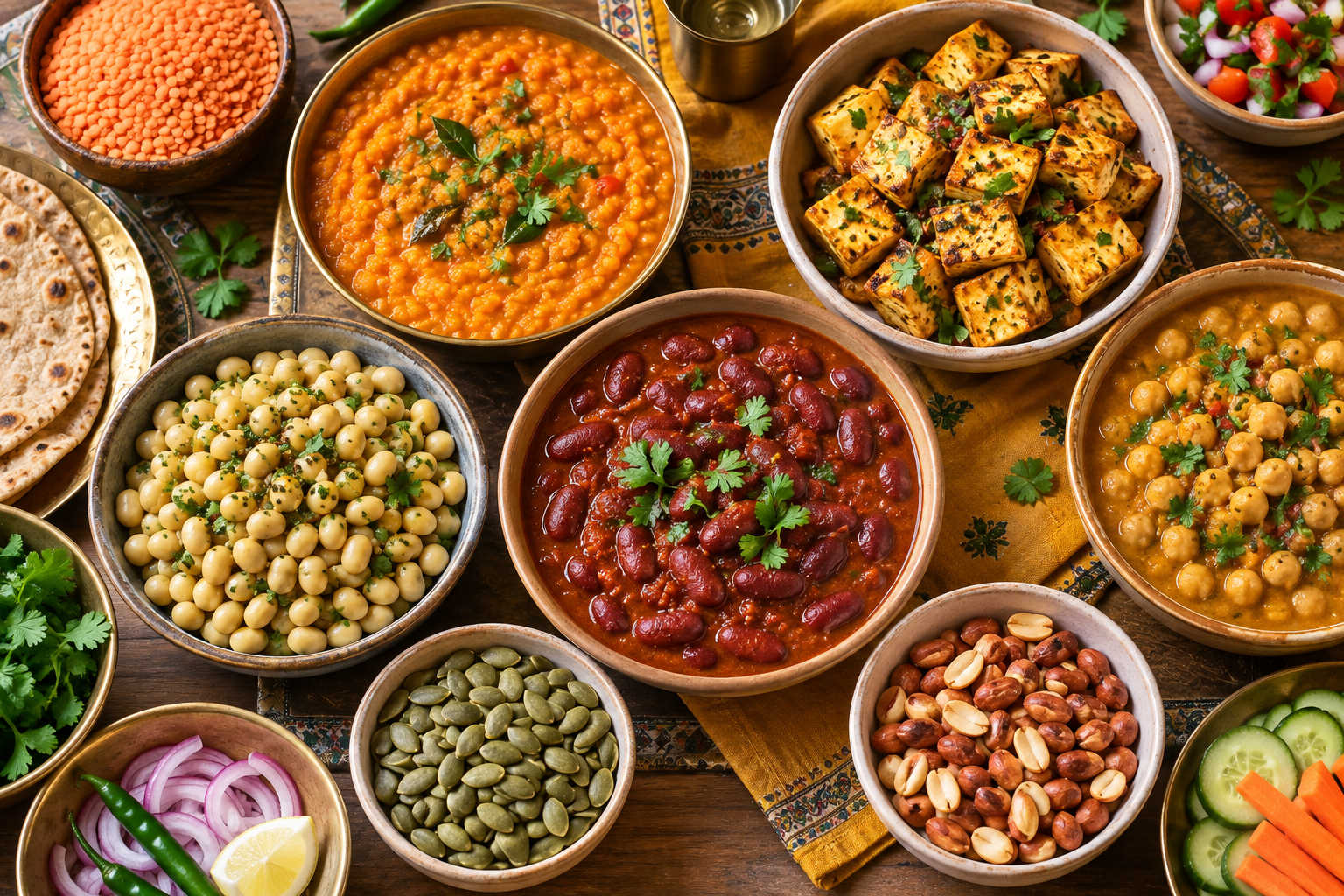
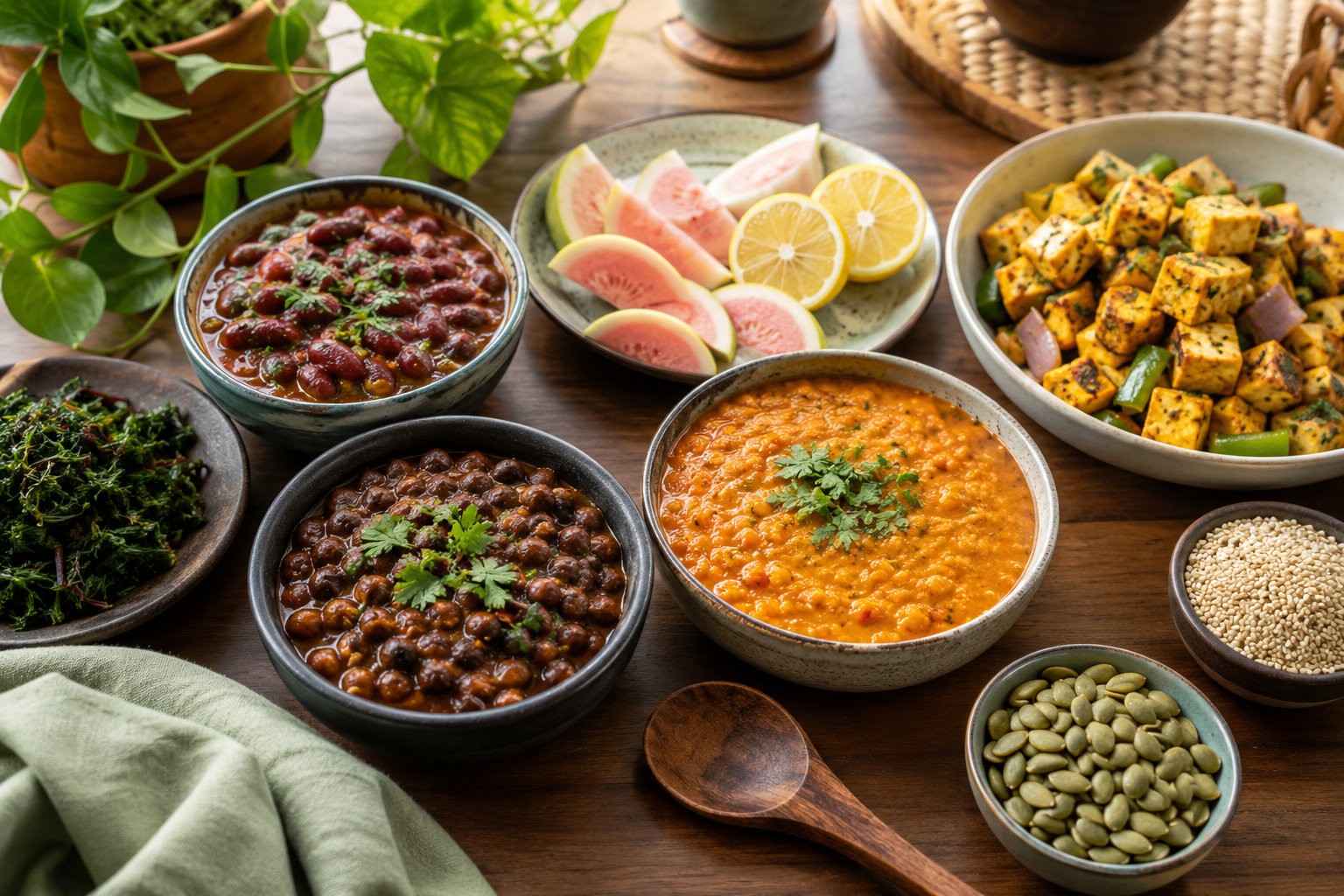
- Vary your proteins with dals, chickpeas, rajma, peas, peanuts, seeds and wheat protein.
- Choose calcium-fortified plant milk when it is replacing dairy regularly.
- Do not use fear-based reels as a substitute for clinical evidence.
- Seek individual advice for allergies, medication timing or a diagnosed condition.
The bottom line
Soy does not deserve its online reputation as a hormone disruptor. The strongest clinical evidence does not show that soy raises oestrogen or lowers testosterone in men. For most people, tofu, tempeh and soy milk can be useful, affordable parts of a varied vegan diet.
Try soy in our vegan recipe collection, and explore more evidence-led nutrition articles from Kindness Media.












Leave a Reply
Let us know what you think about the blog post above, we’re interested in hearing from you!