

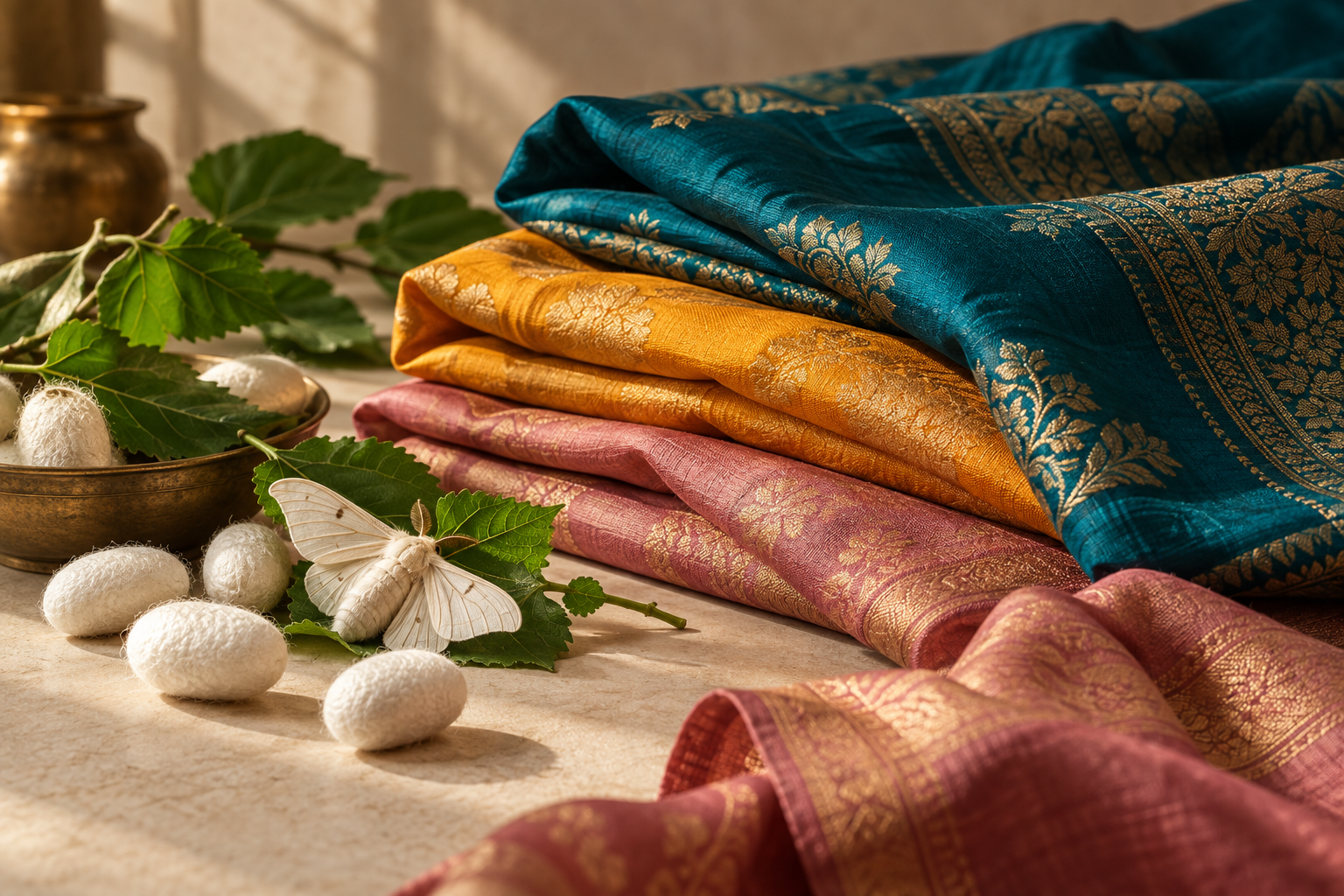
Silk is woven into Indian weddings, heirlooms and regional craft. But if you are trying to dress vegan, the answer is straightforward: conventional silk is not vegan because the fibre is produced by an animal and standard processing prevents the moth from emerging.
Why conventional silk is not vegan
Silk begins as the cocoon spun by a silkworm. To reel a long, unbroken filament, conventional production treats the cocoon before the moth can break through it. India’s Central Silk Board describes steam stifling, while another official guide describes steaming cocoons at about 97–98°C before reeling.
That makes silk different from a plant fibre. It is not simply a fabric with an unfortunate supply chain; it is an animal-derived material whose usual manufacture depends on controlling the silkworm’s life cycle.
Does the type of silk change the answer?
Mulberry silk, tussar, muga and eri differ in species, region and processing. Yet they all originate from insects. Some eri silk is spun after the moth emerges rather than reeled as one continuous filament, which can avoid killing the pupa at that stage. That may reduce one specific harm, but it does not make the fibre plant-based.
The Vegan Society’s definition extends beyond food to avoiding animal exploitation in clothing and other uses where possible. Under that definition, all new silk—including “peace silk”—remains outside a vegan wardrobe.
What does “ahimsa silk” actually mean?
Ahimsa or peace silk generally describes silk collected after a moth has been allowed to emerge. Because the cocoon is broken, the fibre is usually spun rather than reeled.
It can be a less harmful choice than conventional silk, but the label does not automatically answer every ethical question. It can still involve breeding and managing insects for commercial production, and shoppers may not receive independently verified information about how the moths were raised or what happened across the full supply chain.
If your standard is “no animal-derived material,” ahimsa silk is still not vegan. If your standard is harm reduction, ask the brand for traceable details rather than relying on the word ahimsa alone.
Vegan alternatives that work beautifully in India
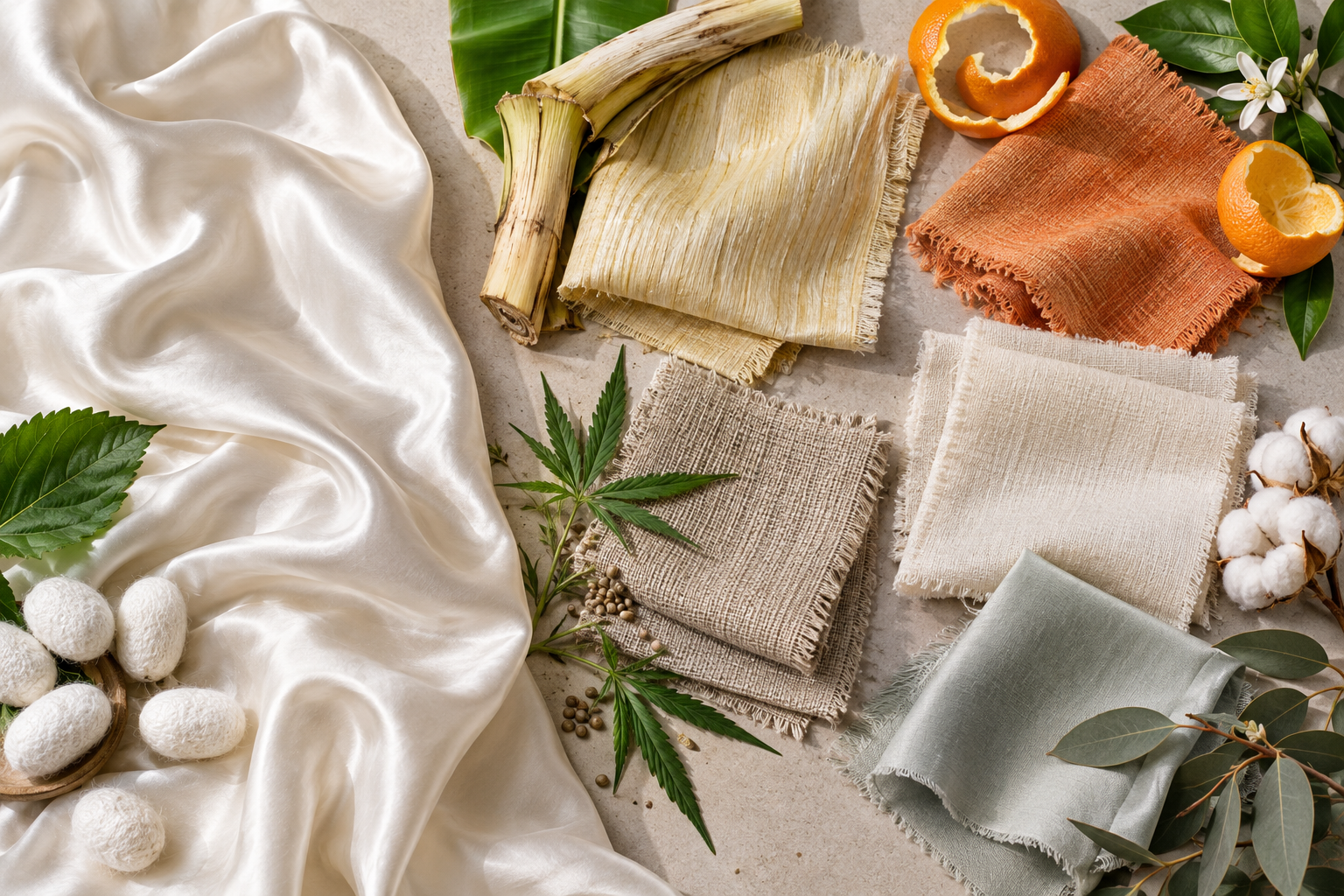
You do not need animal silk to create drape, colour or occasion wear. Look for:
- Cotton satin or mercerised cotton: breathable, familiar and widely available.
- Linen and hemp blends: textured natural fibres that soften with wear.
- Lyocell: a regenerated cellulose fibre known for fluid drape; check the full blend.
- Banana, orange and other agricultural-residue fibres: promising options, though products may be blended with silk or synthetics.
- Recycled polyester satin: animal-free and silk-like, but still plastic-based, so longevity and care matter.
A five-second label check
Read the fibre-composition label, not only the marketing name. “Silk finish,” “silky” and “art silk” may describe appearance rather than content. Check the outer fabric, lining, embroidery thread, trims and tassels. A fabric that is 90% plant-based and 10% silk is still not vegan.
Ask three questions: What is the fibre? Is any silk, wool, leather, shell or animal glue used? Can the brand confirm the full blend in writing?
What about vintage or inherited silk?
Some vegans keep inherited garments to avoid waste; others do not feel comfortable wearing an animal-derived fibre. That is a personal decision. What matters for future demand is choosing animal-free materials when buying new.
The bottom line
Conventional silk is not vegan, and “peace silk” does not become plant-based simply because the moth may emerge first. India already has the craft skill to make spectacular occasion wear without animal fibres. The most useful shift is to ask better questions, reward transparent designers and make vegan materials culturally desirable—not merely acceptable.
For more practical swaps, explore our evidence-led guide to plant-based choices and the latest resources across Kindness with Amy.













Leave a Reply
Let us know what you think about the blog post above, we’re interested in hearing from you!