


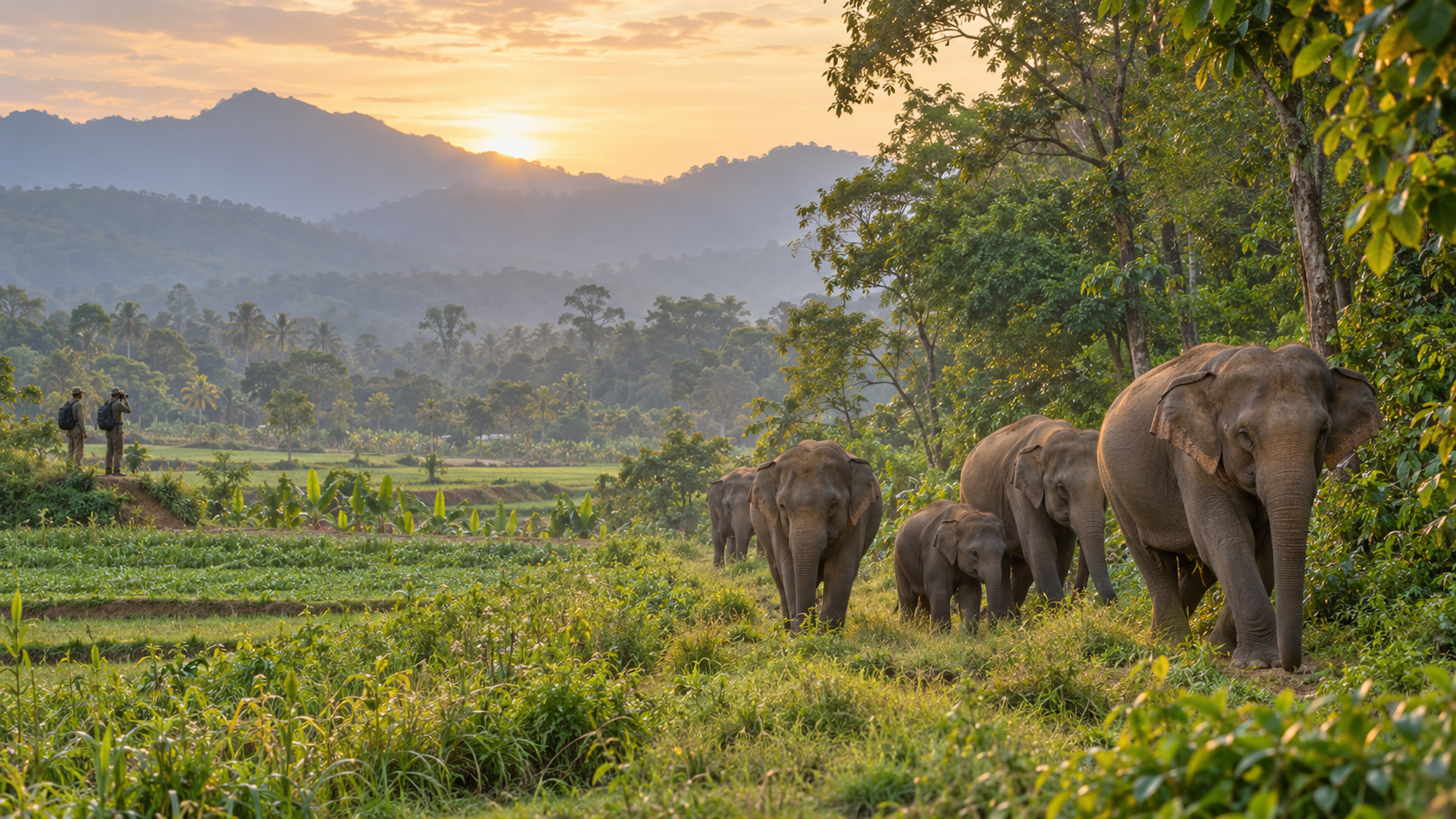
On 7 October 2026, a debate in Kerala returned to a difficult question: what does it mean to protect both people and wild animals when homes, farms and elephant corridors meet? Kerala’s forest minister called for a “middle path” in Chinnakanal, where past settlement decisions and later development have intensified danger for residents and elephants alike.
A compassionate response cannot treat either community as disposable. It must reduce immediate risk, repair fragmented habitat and make sure families living beside forests are heard, compensated and supported.
Why conflict is the wrong starting point
“Human-wildlife conflict” is useful shorthand, but it can hide the real drivers. Elephants do not cross a legal boundary and decide to cause trouble. They follow remembered routes to water, food and seasonal habitat. Risk rises when roads, resorts, farms, fences and settlements cut those routes into smaller pieces.
India’s Ministry of Environment, Forest and Climate Change says human-wildlife conflict is often more intense outside protected areas than inside them. That matters: a national park alone cannot protect a species whose movement depends on landscapes shared with people.
The same ministry’s National Human-Wildlife Conflict Mitigation Strategy and Action Plan was released in 2021 with the Wildlife Institute of India and GIZ. Its core logic is practical—coordinate agencies, understand local causes and plan for coexistence rather than relying on one emergency response after another.
What happened in Chinnakanal
According to a report published on 7 October 2026, the Kerala government linked today’s tensions around 301 Colony to earlier decisions to settle families beside a traditional elephant corridor, followed by further development in the area.
That history shows why blame is so unhelpful. Tribal families did not design the policy that placed homes there. Elephants did not approve the construction that narrowed their route. A humane solution starts by acknowledging those facts.
Five parts of real coexistence
1. Keep corridors connected
Protecting and restoring movement routes is prevention, not a luxury. Land-use planning should stop new construction in high-risk passages, restore native vegetation and use scientifically mapped corridors before approving roads or tourism projects.
2. Design barriers that do not injure animals
Where farms need protection, poorly maintained electric fences, trenches and improvised wires can maim or kill. Community-managed early-warning systems, watch teams, crop planning and properly designed non-lethal barriers reduce surprise encounters without turning the landscape into a trap.
3. Pay fair compensation quickly
A farmer who loses a season’s crop or a family that loses a wage earner cannot wait months for paperwork. Transparent claims, local help desks and time-bound payment build trust. Compensation is not charity; it is part of sharing the cost of conservation fairly.
4. Give communities decision-making power
Local residents understand when elephants arrive, which water points have disappeared and where a warning system fails. Forest departments, panchayats, scientists, Adivasi representatives and animal-welfare groups should plan together. Consultation after a decision is not participation.
5. Use emergency action as a last resort
Capture and relocation can move danger rather than solve it, and it can be traumatic for a highly social animal. Every intervention should be independently assessed, publicly explained and grounded in behaviour, habitat and welfare evidence.
Where vegan ethics fits
Veganism asks us to reject the assumption that human convenience automatically outweighs an animal’s life. That does not mean ignoring the fear of a parent walking a child to school or a farmer guarding a crop. It means refusing a false choice between human safety and animal survival.
The same ethic behind our article on animal sentience and India’s cruelty law applies here: sentient beings deserve policies that take their needs seriously before a crisis.
What readers can do
- Support organisations that protect habitat and work with affected communities, not attractions that profit from captive wildlife.
- Choose responsible tourism and ask whether a property blocks a corridor or uses harmful fencing.
- Share verified alerts from local authorities rather than sensational videos that encourage crowds around frightened animals.
- Write to local representatives about corridor protection, fair compensation and transparent land-use decisions.
- Keep compassion broad: for rural families, forest workers and the animals navigating a landscape altered around them.
Coexistence is not a soft alternative to safety. It is the serious work of removing the conditions that make tragedy predictable. Kerala’s current debate is a reminder that humane policy must look backwards honestly—and plan forwards with both people and animals in the frame.












































Leave a Reply
Let us know what you think about the blog post above, we’re interested in hearing from you!