



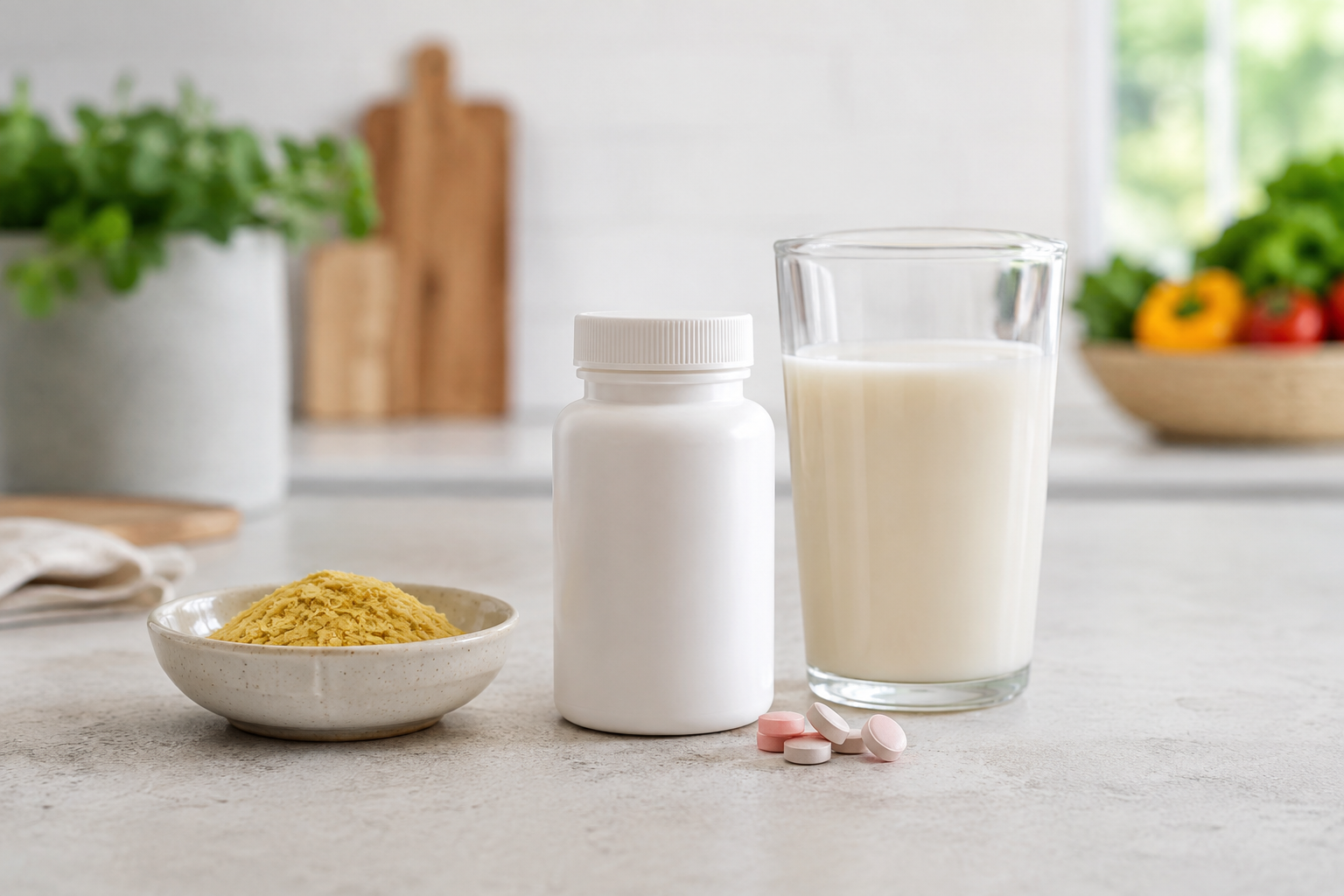
Most collagen powders are not vegan. Collagen is a structural animal protein, and supplements commonly come from bovine, porcine, chicken or fish tissues. Products marketed as “vegan collagen” are usually collagen builders: combinations of nutrients intended to support the collagen your body already makes.
What collagen does in the body
Collagen helps form skin, tendons, cartilage, bone and other connective tissues. Your body builds it from amino acids—especially glycine, proline and lysine—along with important cofactors.
Vitamin C is central to that process. The US National Institutes of Health states that vitamin C is required for collagen biosynthesis. This is why a diet containing adequate protein plus vitamin C matters more than any single “beauty food.”
Can plants contain collagen?
No ordinary fruit, vegetable, pulse or seed contains collagen. Plants can provide the raw materials your body uses to make it.
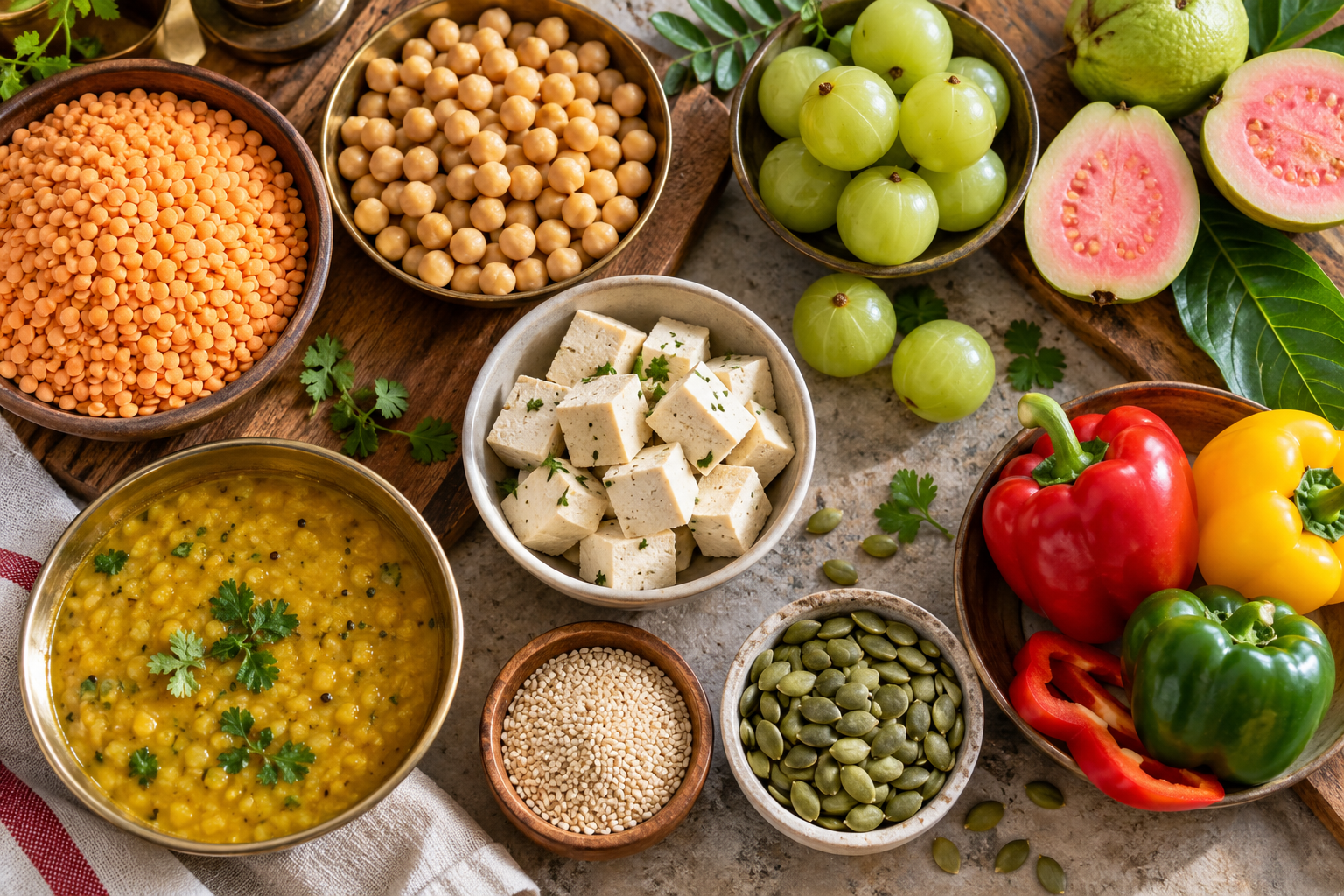
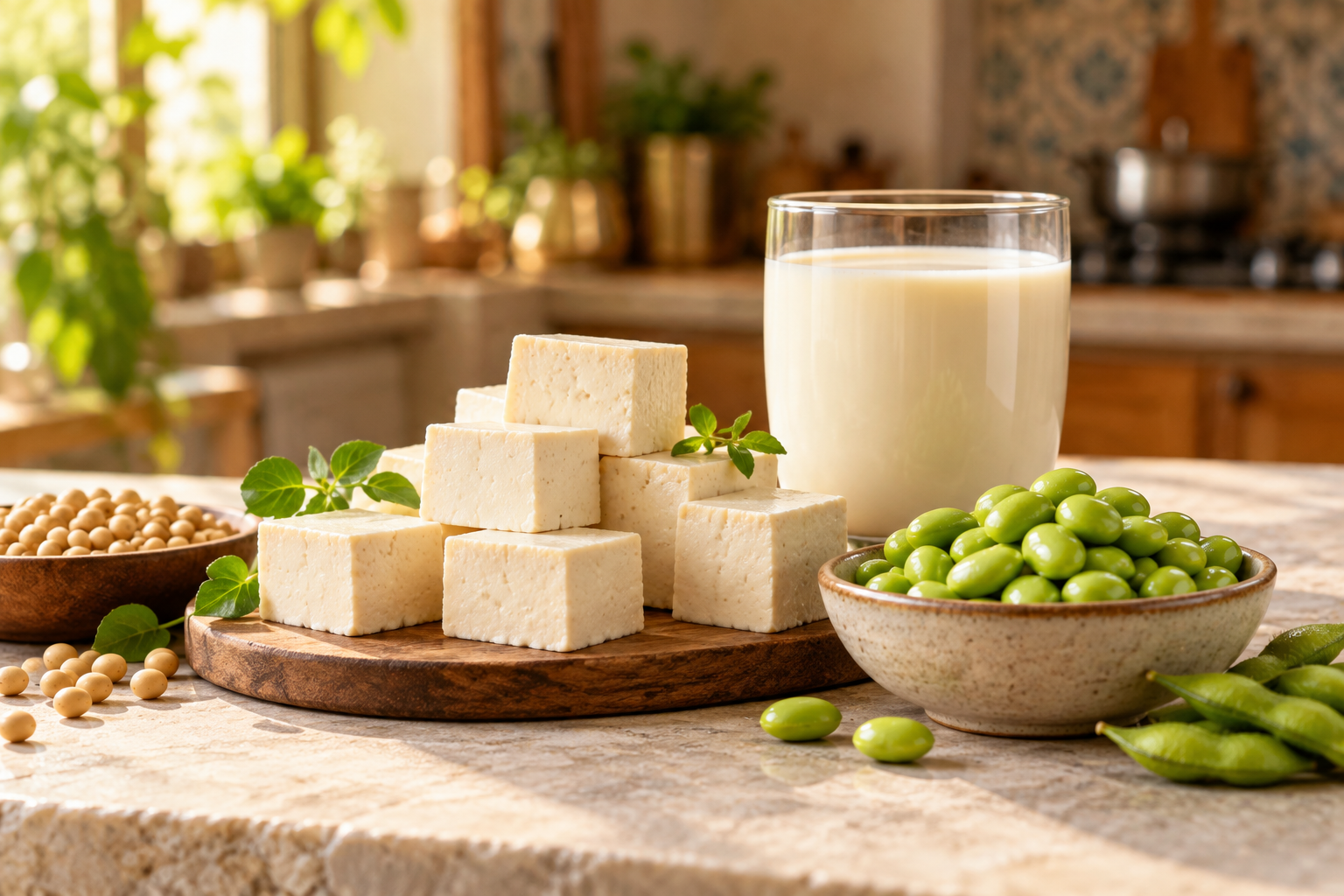
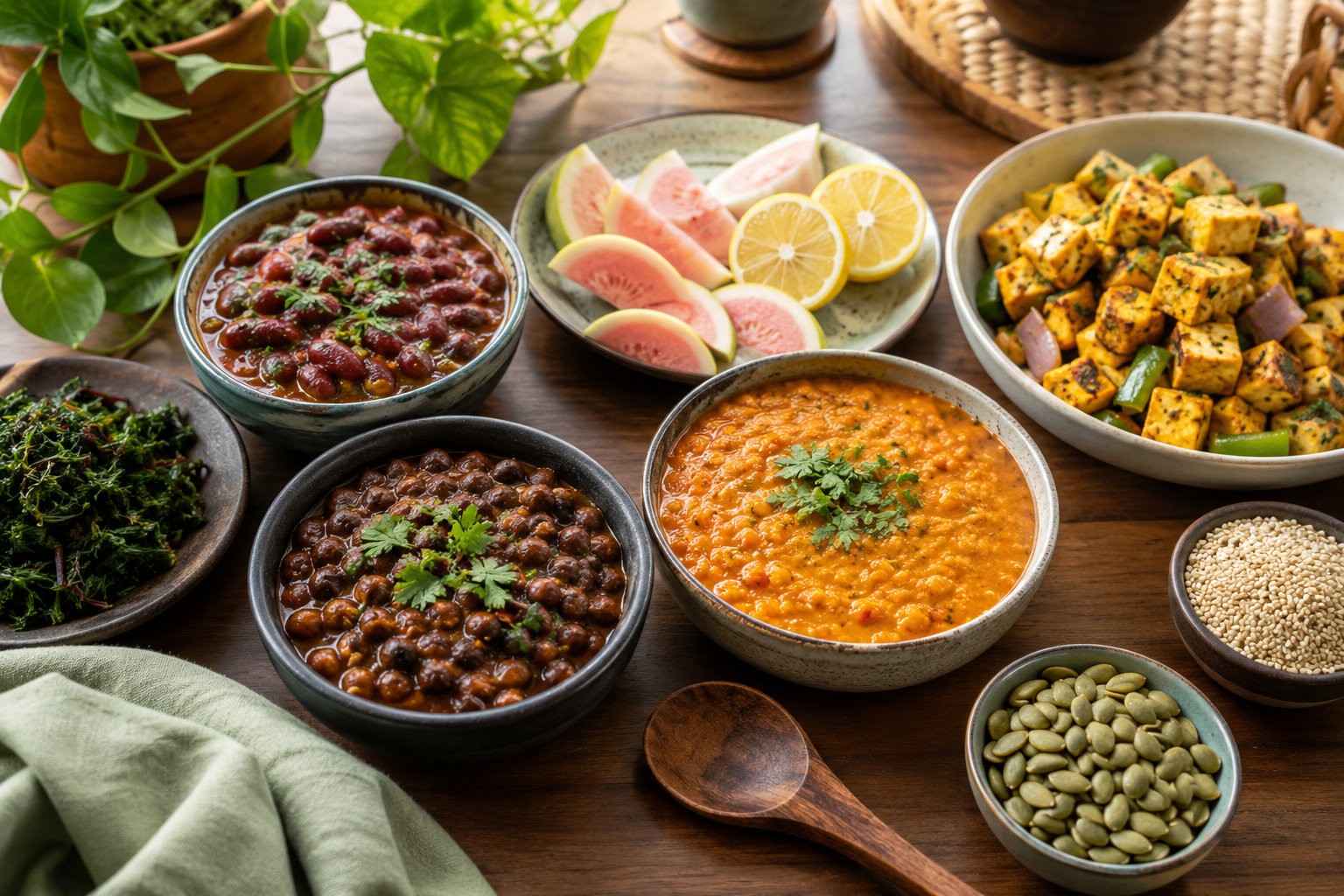
Useful vegan protein sources include dal, chana, rajma, soybeans, tofu, tempeh, peanuts, sesame and pumpkin seeds. A review of common beans notes that glycine, proline, lysine and dietary cofactors are involved in collagen formation. Pair varied protein foods with vitamin C-rich amla, guava, citrus, capsicum, tomatoes and berries.
What “vegan collagen” on a label may mean
- Collagen builder: vitamins, minerals, amino acids or plant extracts; it is not collagen itself.
- Vegan collagen booster: a marketing term with no single standard formula.
- Fermentation-derived collagen: collagen-like or recombinant proteins made with microorganisms; availability is still limited.
- Hydrolysed or marine collagen: animal-derived and not vegan.
Do not assume the front label tells the whole story. Check the ingredient list and look for credible vegan certification.
Does a vegan collagen builder work?
The evidence is emerging, but it is not yet as extensive as advertising often implies. One 2024 study reported benefits from a specific vegan collagen-builder formulation, but it assessed a multi-ingredient product and its findings should not be treated as proof that every “vegan collagen” powder works. You can read the study abstract on PubMed.
Research on animal-derived collagen peptides also cannot automatically be transferred to plant nutrient blends. Different products contain different compounds and doses.
A practical vegan collagen-supporting plate
- Include a protein-rich food at each main meal: tofu, soy chunks, dal, beans or chickpeas.
- Add a vitamin C-rich food with meals: amla, guava, capsicum, citrus or tomatoes.
- Eat a varied diet that supplies zinc and copper from legumes, nuts, seeds and whole grains.
- Protect skin from excessive sun exposure and avoid smoking; supplements cannot outwork every lifestyle factor.
If you want a simple place to begin, our guide to vegan calcium sources in India and our soy and hormones explainer both focus on affordable everyday foods.
How to shop without being misled
Avoid ingredients such as bovine collagen, marine collagen, fish collagen, porcine collagen, chicken collagen and gelatin. For amino-acid blends, confirm the source because an amino acid can be produced through different routes. Look for batch details, realistic claims and third-party testing.
People who are pregnant, breastfeeding, managing kidney disease, taking medication or treating a diagnosed deficiency should discuss supplements with a qualified clinician.
The bottom line
You do not need to consume an animal’s collagen for your body to make collagen. A well-planned vegan diet can provide protein, vitamin C and the other nutrients involved. Treat “vegan collagen” as a product category that needs scrutiny—not as a magic ingredient—and build the foundation with food first.














Leave a Reply
Let us know what you think about the blog post above, we’re interested in hearing from you!