

The Rise of Plant-Based Foods and the Processing Question
As plant-based eating has gone mainstream, a common criticism has emerged: aren't vegan foods just ultra-processed junk? It's a question that deserves a nuanced answer, because the truth is far more complex than the headlines suggest.
The global plant-based food market is booming, expected to reach $77.8 billion by 2025. With this growth has come an explosion of vegan alternatives—from burgers that "bleed" to dairy-free cheeses that melt. But does plant-based automatically mean ultra-processed?
Understanding the NOVA Classification System
To answer this question, we need to understand how food processing is categorised. The most widely used system is NOVA, developed by researchers at the University of São Paulo. It divides foods into four groups:
- Group 1: Unprocessed or minimally processed foods — fruits, vegetables, grains, legumes, nuts, seeds, herbs, spices, and water
- Group 2: Processed culinary ingredients — oils, butter, sugar, salt, and flour
- Group 3: Processed foods — canned vegetables, artisan bread, cheese, and preserved fruits
- Group 4: Ultra-processed foods (UPFs) — industrial formulations with five or more ingredients, often containing additives like emulsifiers, flavourings, and preservatives
It's Group 4 that generates the most concern—and where much of the debate around vegan foods centres.
The Vegan Food Spectrum
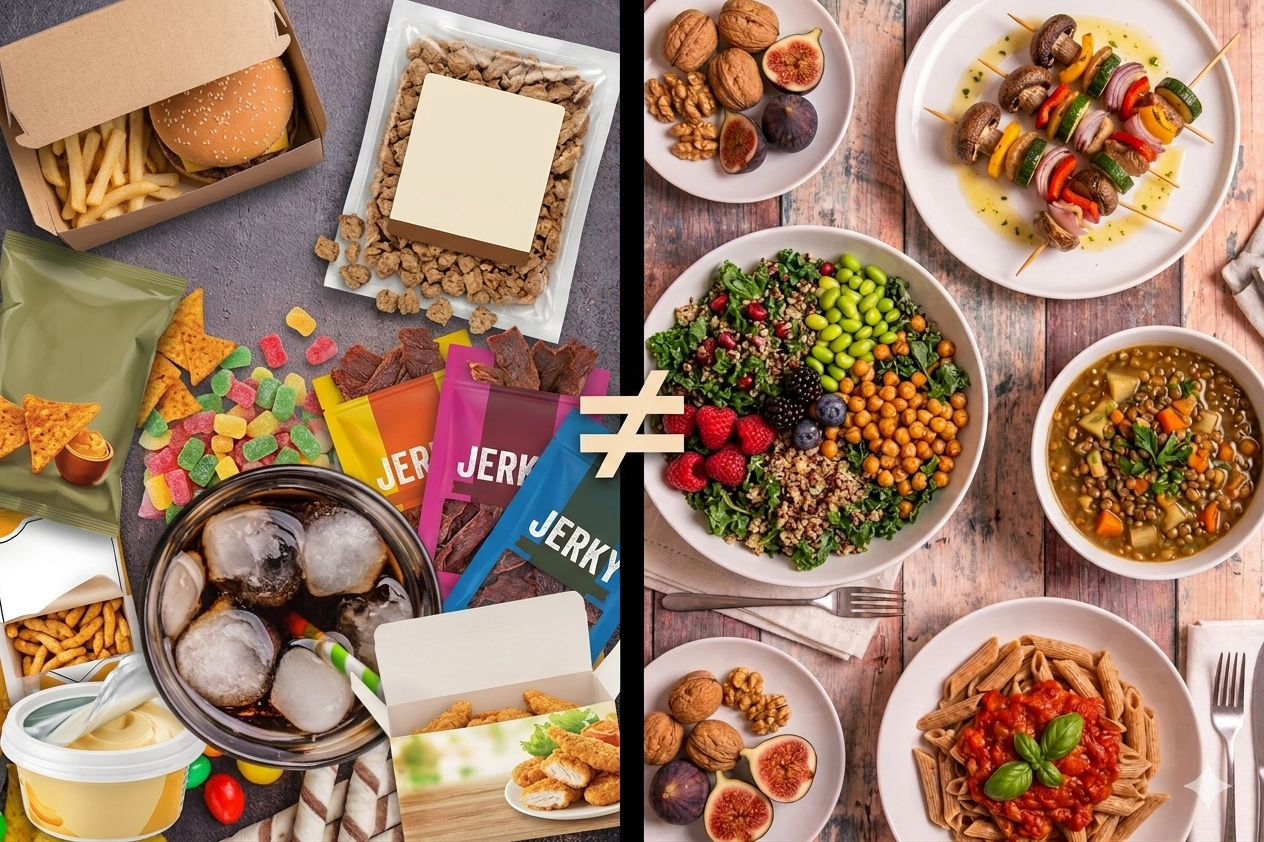
Here's the crucial point that often gets lost in the debate: vegan food exists across all four NOVA categories. A whole food plant-based diet centred on fruits, vegetables, legumes, and grains is predominantly Group 1—the least processed category.
Consider a typical day of plant-based eating: oatmeal with fresh berries for breakfast, a lentil and vegetable soup for lunch, and a stir-fry with tofu and brown rice for dinner. Every component falls into Group 1 or Group 2.
The issue arises when we look at the growing market of plant-based alternatives designed to mimic animal products. Many of these—like certain vegan burgers, sausages, and cheeses—do fall into Group 4.
What Does the Science Actually Say?
A 2021 study published in the Journal of Nutrition found that while some plant-based alternatives are technically ultra-processed, their nutritional profiles often differ significantly from other UPFs. Many plant-based alternatives are:
- Lower in saturated fat than their animal-based counterparts
- Free from cholesterol
- Higher in fibre
- Fortified with essential nutrients like B12 and iron
Research from the University of Oxford found that even when plant-based diets included processed alternatives, they still had a significantly lower environmental impact than diets centred on animal products.
The "Processing" Double Standard
It's worth noting that many commonly consumed animal products are also ultra-processed—think chicken nuggets, fish fingers, processed meats like bacon and sausages, and flavoured yoghurts. Yet the "ultra-processed" label seems to be applied disproportionately to vegan alternatives.
As food scientist Dr. Emma Derbyshire notes, "We need to be careful about applying the ultra-processed label selectively. The conversation should be about the overall nutritional quality of our diets, not about singling out specific food categories."
A Balanced Perspective
The most helpful approach is to view vegan foods on a spectrum rather than as a single category. At one end, you have whole, minimally processed plant foods—widely recognised as among the healthiest foods available. At the other end, you have highly processed vegan alternatives that, while convenient, should probably be consumed in moderation.
The key takeaway? Being vegan doesn't automatically mean eating ultra-processed food, just as eating animal products doesn't automatically mean eating whole foods. The level of processing depends on the specific choices you make within any dietary pattern.
Making Informed Choices
If you're looking to minimise ultra-processed foods in a plant-based diet, here are some practical tips:
- Build meals around whole foods — legumes, whole grains, fruits, vegetables, nuts, and seeds should form the foundation of your diet
- Read ingredient lists — shorter ingredient lists with recognisable items are generally a good sign
- Use alternatives strategically — plant-based alternatives can be helpful for transition and convenience, but shouldn't be the cornerstone of your diet
- Cook from scratch when possible — homemade meals give you complete control over ingredients and processing
- Don't let perfect be the enemy of good — even a diet that includes some processed vegan foods is likely to have health and environmental benefits compared to a standard Western diet
The ultra-processed food debate is important, but it shouldn't be used as a blanket argument against plant-based eating. The evidence overwhelmingly supports that diets rich in whole plant foods are among the healthiest and most sustainable available to us.





Leave a Reply
Let us know what you think about the blog post above, we’re interested in hearing from you!